

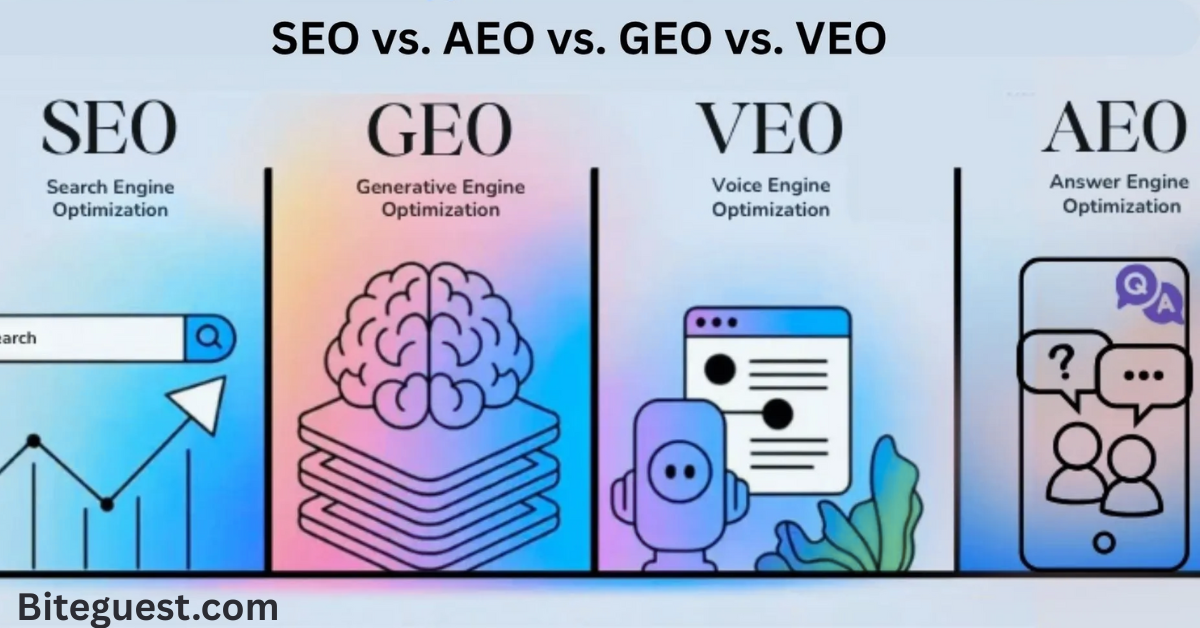
The year 2026 is witnessing rapid evolution in SEO trails. AI is really beginning to shape how people navigate the net. Simply put, the familiar ranking methods in SEO, along with new techniques such as GEO, AEO, and LLMO, will be the significant determinants of digital visibility and traffic. Suppose you are a digital marketer or a brand looking to create strong website visibility and get a steady flow of organic traffic. In that case, you must understand all the terms mentioned above and their characteristics. Besides, this guide will take you through each of them, pointing out where they differ and providing content applicable to both standard search engines and AI-based ones in the future.
Why SEO Is Changing in 2026
AI is changing the patterns of communication about information. The Generative AI systems of today, like ChatGPT or Google Gemini, are turning extensive questions into short answers, thereby affecting the normal click-through behaviour. Zero-click searches and AI-driven summaries have begun to replace some organic traffic. The Semantic SEO, entity recognition, and contextual content are the new requirements for becoming a relevant player in the game.
Why New Acronyms Like GEO, AEO, LLMO Matter
The terms GEO, AEO, and LLMO reflect the evolution of content optimization in AI-dominated search.
- GEO ensures content is recognised by generative engines.
- AEO focuses on answer-first content for voice and snippet searches.
- LLMO targets large language models to ensure the production of structured, trustworthy content.
By understanding these methods, brands can synchronise search intent optimisation with visibility across multiple platforms, ensuring their dominance in the modern search ecosystem.
What Is SEO Today? (Modern Search Optimization Explained)
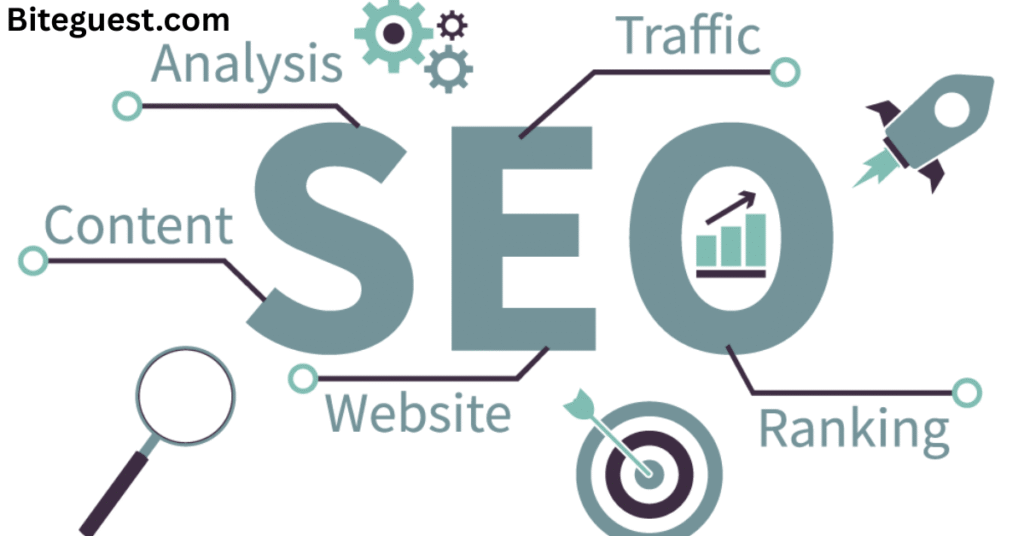
Even in 2026, SEO remained a primary digital marketing tactic. The three major areas of focus—technical SEO, on-page optimization, and off-page techniques—remained instrumental in generating organic traffic. However, future SEO incorporates knowledge of semantics, search intent optimization, and promotion across multiple platforms to stay up to date.
Core SEO strategies that still matter
To be successful, you need great content, appropriate meta descriptions, fast page load speed, and a mobile-friendly website, among other things. Apart from that, gaining links from trusted sources, using well-structured headings, and creating content that ranks well also enable search engines to evaluate the trustworthiness and relevance of your site easily.
Technical, on-page, off-page fundamentals
Working on crawlability, indexability, and Core Web Vitals ensures that the content is accessible to both AI and human users efficiently. Besides, Internal linking, schema markup, and proper URL structures contribute to higher Google rankings.
Why SEO is not disappearing
Contrary to expectations, SEO is not dying; it is on the rise. The brands that prepare for the future by blending classical methods with newly empowered AI strategies will not only be visible in searches but also gain the advantage of receiving organic traffic in a competitive market.
What Is GEO? (Generative Engine Optimisation)
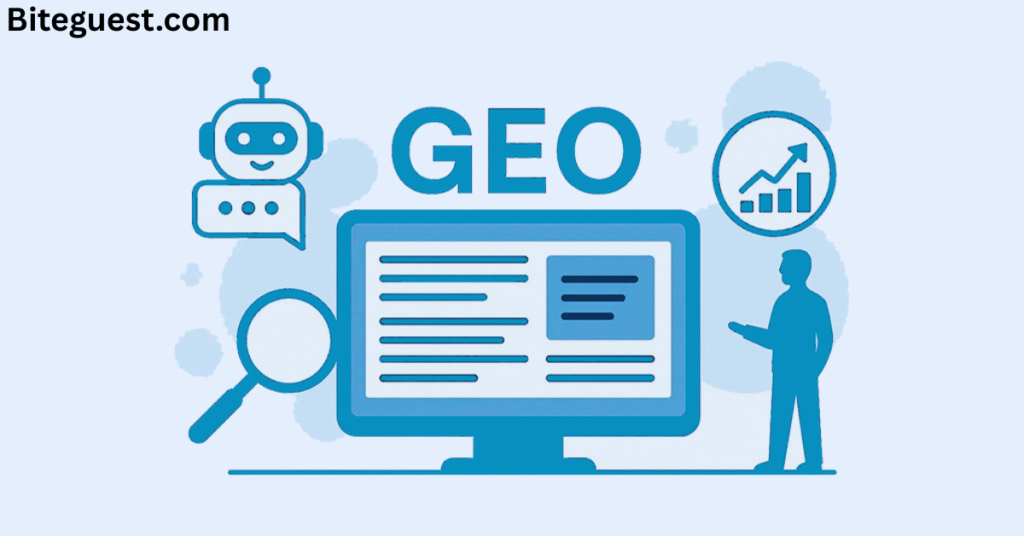
GEO, which stands for Generative Engine Optimisation, aims to optimise content for AI-based summaries, chatbots, and virtual assistants. Thus, it ensures that the content can be used as a reference for AI content extraction and generative summaries in search results.
How GEO relates to AI chatbots & search assistants
AI engines perceive content in their own way, which differs from how humans do. They depend on precise, well-structured answers, recognition of entities, and verified data sources. By using GEO, the content becomes more AI-friendly, increasing the likelihood that your website will be included in AI-generated responses.
GEO strategies you can start using today
- Organize content with clear topic clusters.
- Include entity optimization and knowledge graph signals.
- Use authoritative sources to support AI data-backed insights.
- Ensure content clarity for prompt-driven discovery.
Keywords that trigger AI Overviews
Using highly relevant entities, long-tail semantic keywords, and clear context helps AI understand your content. Incorporate NLP-friendly phrasing to improve response accuracy in AI-generated results.
What Is AEO? (Answer Engine Optimization)
AEO or Answer Engine Optimization has won the battle for visibility of content in the formats of direct answers such as featured snippets, knowledge panels, and voice searches. Structured answers are given priority here instead of keyword density, unlike traditional SEO.
What answer-first content really means
AEO delivers the answers directly to the users. Voice search, knowledge panels, and AI snippets depend on structured and clear responses. This method ensures content appears in zero-click answers and featured snippets, thereby boosting visibility even without regular clicks.
AEO strategies used in 2026 search
- Use FAQ optimisation and schema markup to improve AI recognition.
- Answer long-tail questions clearly and concisely.
- Format content for direct answers and Q&A sections.
How AEO affects content planning
Now, the content strategy should anticipate the intent of the search that best matches. Every single item must clarify the questions, be semantically related, and provide search patterns of behaviour that will elevate the AI’s visibility.
What Is LLMO? (Large Language Model Optimization)
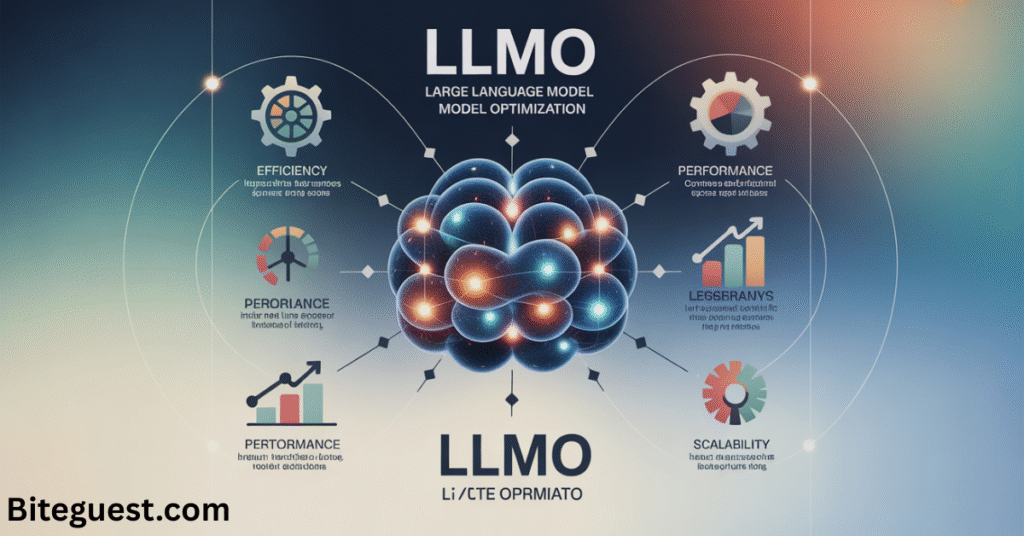
LLMO focuses on optimizing content for large language models (LLMs), such as ChatGPT. When producing answers, these models favour content that is authoritative, organized, and verified as a fact.
Why LLMs need structured, trustworthy content
AI models perform semantic analysis, entity recognition, and even generate insights based on data. Well-structured, well-organized content gives you the advantage of having your information included in AI-generated responses and multi-source learning systems.
How brands optimize for LLM-generated answers
- Provide structured answers with clear headings.
- Cite industry-trusted sources.
- Include original insights and first-party data to boost credibility.
Content formats that perform well in LLMO
Structured lists, step-by-step guides, tables, and diagrams work best. Adding contextual content and topic clusters boosts the content’s AI comprehension and usability.
SEO vs GEO vs AEO – Key Differences and Similarities
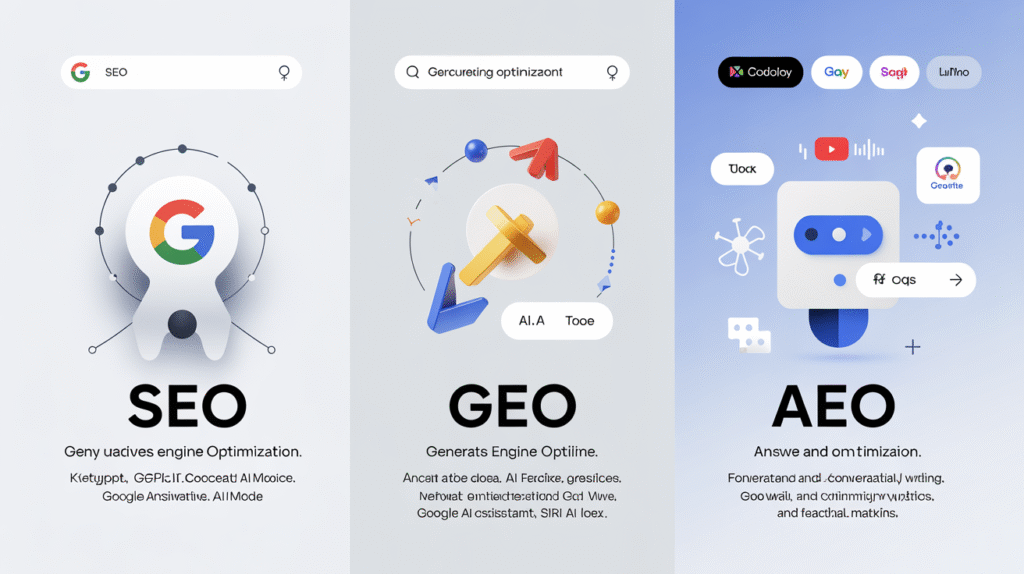
| Element | SEO (Search Engine Optimization) | GEO (Generative Engine Optimization) | AEO (Answer Engine Optimization) |
| Primary Goal | Rank on search engines. | Get cited by AI tools. | Become the main answer for AI and voice tools. |
| Main Platforms | Google, Bing. | ChatGPT, Gemini, Copilot, Perplexity, Google AI Mode. | Google AI Overviews, Google Assistant, Siri, Alexa. |
| Content Format | Blogs and web articles. | Q&A and structured content. | FAQs and snippets. |
| How Users Search | Keyword-based searches. | Natural and complete questions. | Conversational questions. |
| Optimization Focus | Keywords, links, and technical SEO. | Accurate data and AI-friendly writing. | Schema, FAQs, and intent matching. |
| Where Content Lives | Mostly on your website. | Across many platforms, such as Reddit and Quora. | Websites, forums, YouTube, and social sites. |
| Success Metrics | Clicks and website traffic. | Citations and AI mentions. | Brand mentions and citations. |
| Measurement Tools | Google Analytics and Search Console. | AI dashboards and query tracking tools. | AI citation tools and voice SEO tools. |
E-E-A-T: Authority, Experience & Trust in Modern Search
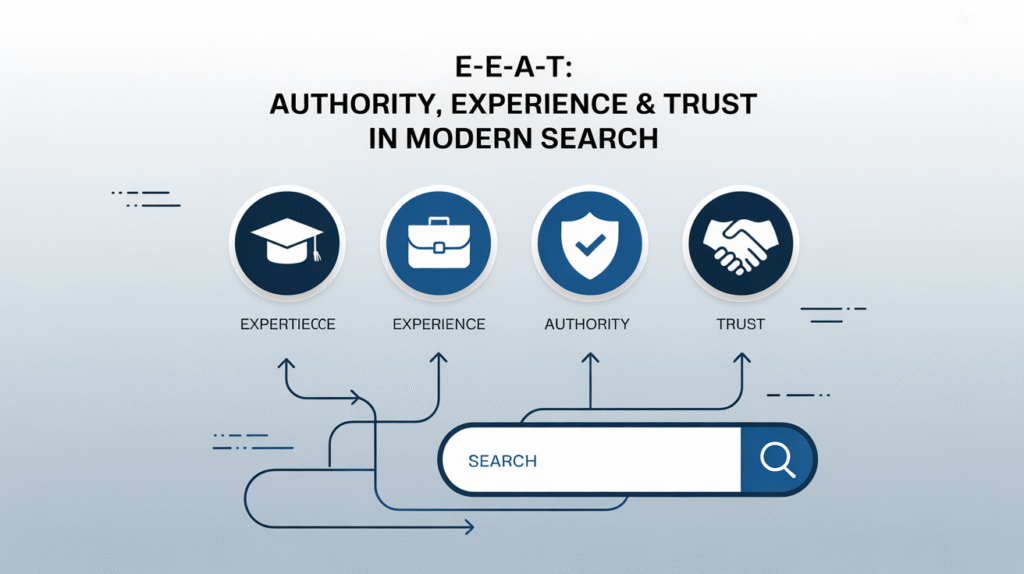
Authority Signals Google and AI Models Trust
The E-E-A-T system ensures credibility recognition by both AI and humans. Getting links, brand references, and high-quality content is essential.
Real Experience in Content
To demonstrate real-world experience, use examples, case studies, and direct involvement. Models of AI content consider experience, proof, and clarity as the most important factors.
Trust Elements That Improve Rankings and AI Visibility
Along with original insights, first-party data, and proper authorship, trust is built. Trust signals are affecting both organic rankings and AI-generated content citations.
Search Everywhere Optimization (SEO 2.0)
SEO 2.0 aims to keep brands visible across search engines, AI engines, social search, and voice search, requiring them to optimize their presence across multiple platforms simultaneously.
Optimising for Search Engines + AI Engines + Social Search
- Use cross-platform content.
- Structure content for multi-source learning.
- Monitor behavioural search patterns across platforms.
Why Multi-Platform Visibility Is the New Advantage
Consumers use search in different ways, and multi-channel visibility ensures the brand is always present, thereby maximizing digital authority.
How Content Creation Changes in 2026
Content should immediately direct attention to the consumer question. Brief, distinct, and organized text is most comfortable for both AI and human readers.
Research Becomes More Complex
To remain competitive in AI-driven search, firms require data-backed insights, entity recognition, and semantic analysis.
Higher Investment in Content Quality
AI measures depth, credibility, and structure. High-quality content will outrank and better match search intent than generic posts.
New KPIs for AI-Driven Search
SEO performance is now required to have new metrics, such as visibility, citations, and coverage in generative summaries, monitored.
Adjusting Your Keyword Strategy for 2026
Keyword Clusters vs Single Keywords
Utilize topic clusters and the semantic relations connecting them instead of isolated keywords. AI likes content that is rich in context.
Intent-Based Keywords
Employ keywords reflecting search intention, for example, “how to optimize for AI search” or “best answer engine strategies.”
Conversational Queries for AI Engines
AI search engines prefer natural-language queries. It is recommended to use FAQ-style queries and conversational language to improve visibility.
How to Explain SEO, GEO, AEO, and LLMO to Clients
Lead with Outcomes, Not Acronyms: It is essential to highlight outcomes such as increased traffic, brand visibility, and AI citations.
- Address the Uncertainty in AI Search: Convey that AI-powered search is a continuous process, and that strategies must change over time to remain effective.
- Anchor Your Explanation to Business Results: Demonstrate how businesses perceive increased organic traffic, conversions, and credibility when they use multi-platform optimization.
- Simple Scripts for Boss, Clients, Friends: SEO gets you clicks, GEO gets AI attention, AEO answers questions instantly, LLMO ensures trust.”
How to Implement a Future-Proof Optimization Strategy
Combine SEO, GEO, AEO, and LLMO principles. Focus on user intent, clearly structure content, improve technical health, and ensure crawlability and index readiness.
Interlink added naturally: For freelancers or marketers looking to leverage AI-driven SEO, this guide is a perfect companion: How to Become a Successful Freelance Digital Marketing Career. It explains how to build authority, attract clients, and apply advanced SEO strategies for 2026.
FAQS
What are the 4 types of SEO?
The four ultimate kinds are technical SEO, on-page SEO, off-page SEO, and local SEO. These help in various ways, thereby enhancing visibility, ranking, and website performance.
What is GEO and SEO?
GEO refers to Generative Engine Optimisation, which focuses on AI search engines and tools. In contrast, SEO stands for Search Engine Optimization, focusing solely on getting pages to rank in Google search results.
Which is better, SEO or GEO?
They are both equally essential, as they operate in different search environments and have practically the same needs. SEO gets you ranked on Google while GEO gets you seen in AI-driven answers and chatbots.
What is an SEO job salary?
The average SEO salary is between $45,000 and $85,000 per annum, with the potential to exceed $100,000 for senior SEO specialists and managers, of course, depending on their skills and location.
Is SEO a good career?
Indeed, SEO is a powerful career option with its demand steadily increasing. All businesses need SEO professional help to achieve search visibility, perform AI-driven optimizations, and enjoy long-term digital growth.
Conclusion
The search landscape is changing rapidly, and it is now necessary to comprehend the interplay of SEO, GEO, AEO, and LLMO for strong online visibility. Search engines and AI tools are increasingly adopting answer-first results, generative replies, and entity-based ranking. Brands offering straightforward information, well-organized content, and genuine expertise will gain greater visibility in both Google search results and AI-driven responses. This transformation makes up-to-date optimization less focused on keywords and more on trust, transparency, and user-friendly content.
By integrating conventional SEO with novel techniques like Generative Engine Optimization and Answer Engine Optimization, a future-proof plan is formed. By focusing on user intent, building reputation, improving technical quality, and providing precise answers, you can ensure your content remains visible across all platforms. The businesses that quickly adapt to this change will enjoy faster growth, higher traffic, and will be ahead of the pack in the new AI-driven search landscape.