

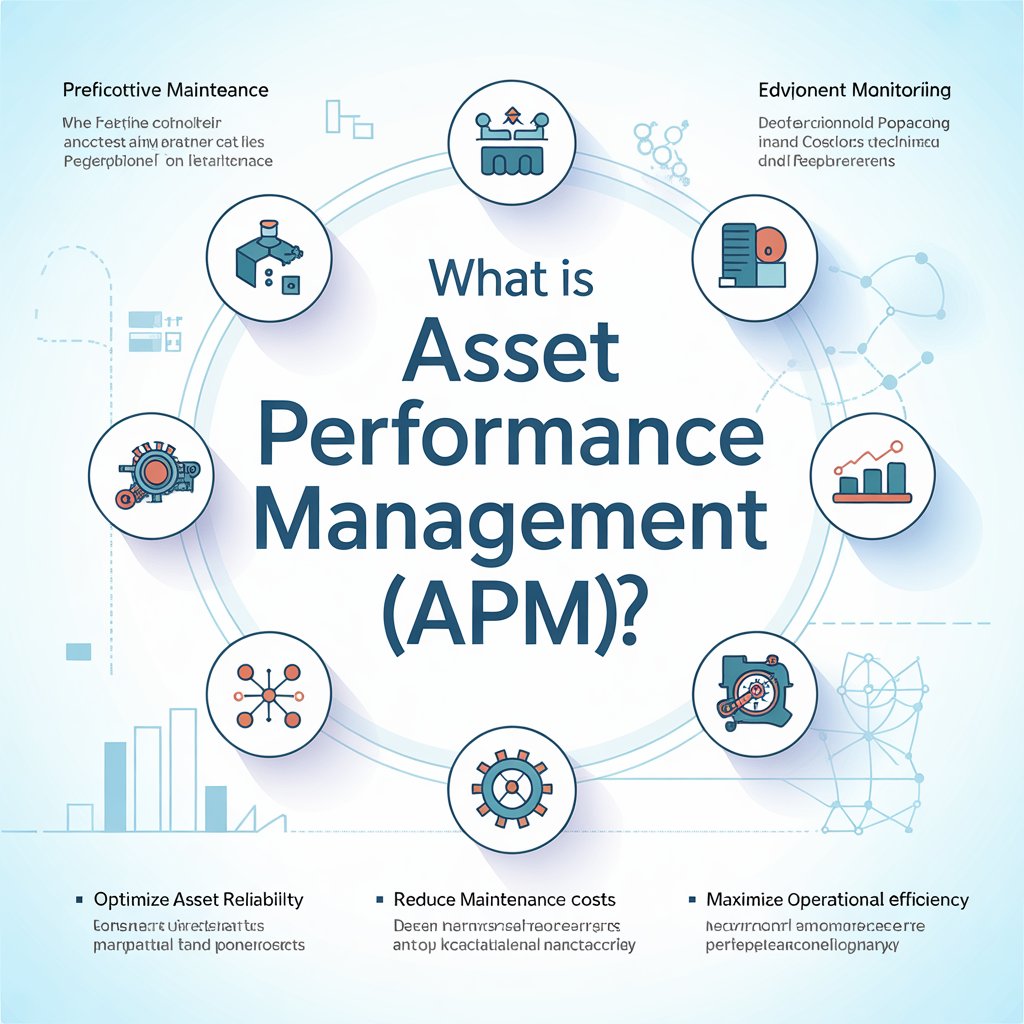
In 2025 & 2026, companies will witness the arrival of a new era of intelligent asset optimization. From manufacturing to energy, logistics, and healthcare, organizations thrive on a plethora of digital and physical assets to manage their business. But how do organizations ensure asset reliability, efficiency, and cost containment in a volatile economy? Here comes APM, or Asset Performance Management.
In this comprehensive guide for 2025-2026, we will first outline what APM entails, how it operates, the technology that enables it, and why it is emerging as a core component of digital transformation. No matter your position —business executive, maintenance manager, or IT strategist —this guide will provide you with applicable knowledge of APM for 2025 and 2026, as it applies to improving uptime, reducing costs, and ultimately driving productivity.
Understanding Asset Performance Management (APM)
Asset Performance Management (APM) is an analytical and data-informed approach to enhance the performance, reliability, and health of business assets. Examples of business assets include factory equipment, vehicles, energy grids, software applications, or IT hardware.
APM, in its simplest form, utilizes AI, IoT sensors, predictive analytics, and cloud-based applications to track the condition of assets in real-time, enabling organizations to evaluate and forecast future asset failures, employ predictive maintenance strategies, and maximize asset utilization to deliver a higher return on investment.
In short, APM can help organizations achieve more with existing assets – improving productivity without the expense of unexpected downtime!
Related Read: What is Intelligent Asset Performance Management (IAPM)? – Discover how IAPM takes APM to the next level with AI-driven decision-making and automation.
How APM Evolved: From Maintenance to Intelligence
Organizations developed a model of reactive maintenance that focused on repairing machinery and equipment once they had failed. Subsequently, preventive maintenance evolved the model of servicing equipment to avoid failure on a pre-scheduled basis.
Today, through artificial intelligence and data analytics, organizations employ real-time predictive and prescriptive maintenance of their equipment, known as asset optimization.
Key Milestones in APM Evolution
| Period | Approach | Result |
| 1990s | Reactive | High downtime |
| 2000s | Preventive | Cost savings |
| 2010s | Predictive | Fewer failures |
| 2020s–2026 | Intelligent APM | Max efficiency |
This evolution reflects how technology—especially Industrial IoT (IIoT) and AI-driven insights—has transformed the way organizations manage their physical and digital infrastructure.
How Asset Performance Works
An effective Asset Performance Management (APM) system is essentially a digital ecosystem for real-time monitoring, predictive analysis, and maintenance planning. The following outlines the steps involved:
- Data collection: Sensors, control systems, and Internet of Things (IoT) devices collect performance data (such as temperature, vibration, and energy consumption) from various assets associated with the organization.
- Data integration: The collected data is integrated into an Enterprise Asset Management (EAM) or Computerized Maintenance Management System (CMMS) where it is stored and analyzed.
- Predictive analysis: Once the data is analyzed, artificial intelligence (AI) and machine learning (ML) algorithms are used to identify unusual trends or potential early malfunctions, sometimes even before the human operator is aware of the concern.
- Actionable insights: The APM software can send maintenance guidance, notifications, or risk scores for those assets, allowing engineers to take proactive measures to mitigate unplanned failures.
- Continuous optimization: As predictive models are continually refined, costs will undergo constant optimization, allowing the organization to manage asset usage, scheduling, and eventual replacement more effectively.
The Difference Between APM and ALM

Although Asset Management (APM) and Asset Lifecycle Management (ALM) share similarities, they focus on distinct goals.
| Aspect | ALM | APM |
| Focus | Asset lifespan | Asset efficiency |
| Goal | Manage value & cost | Maximize performance |
| Tools | Tracking software | Analytics tools |
| Example | Retire the old machine | Keep the machine efficient |
In essence, ALM is about ownership, while APM is about performance.
Core Components of APM Systems
To understand how APM delivers value, it’s essential to know its building blocks.
- Predictive Maintenance: Predictive Maintenance utilizes AI and data models to predict an asset failure. Instead of waiting for an asset to fail, organizations perform maintenance at opportune moments to save time and resources.
- Preventive Maintenance: Scheduled inspections and servicing are used to avoid failure. Preventive Maintenance, combined with predictive analytics, enables optimal performance at the lowest expense.
- Condition Monitoring: Sensors used to track vibration, pressure, temperature, etc., to recognize changes in the asset health in real time.
- Digital Twins: A digital twin is a digital likeness of an asset that mimics performance in real-time. Engineers can model conditions to predict how the asset will respond in different scenarios with no impact on the operation.
- Machine Learning and AI Analytics: Machine learning algorithms analyze historical and real-time data simultaneously and detect hidden patterns for predictive maintenance or optimizing performance.
- Enterprise Asset Management (EAM): EAM provides a centralized environment for tracking, analyzing, and controlling all asset activity, thereby better aligning organizations’ operations with their strategic direction.
Benefits of Asset Performance Management
APM is yielding concrete returns, no matter the industry. Here are its main benefits:
- Decrease in Unplanned Downtime: APM can provide predictive insights into when failures may occur, allowing you to reduce unplanned downtime by as much as fifty percent. Instead of waiting for an expensive breakdown, the company can schedule repairs before something occurs.
- Lower Maintenance Costs: With more efficient maintenance schedules, APM minimizes unnecessary repairs and reduces overall maintenance expenses. Data suggests you can reduce maintenance by 10-40% with the use of predictive insights.
- Increased Reliability: Continuous monitoring demonstrates how your assets are not only running within safe parameters but also extending their normal operating life.
- Increased Operational Efficiency: APM analyzes real-time data related to data handling, enabling smarter and quicker decisions. Teams can view asset-performance dashboards in real-time, as well as measure the data over time to see trends about performance and plan for improvements.
- Safety and Compliance: APM ensures that critical assets are in safe working order and comply with safety regulations, thereby avoiding fines or sanctions.
- Extend Asset’s Effective Life Cycle: Because APM utilizes predictive data insights, it enables optimal usage, extending the working lifespan of existing, invested, and expensive equipment to achieve a return on investment.
Steps to Build an Effective (APM) Strategy (2025–2026)
1. Define Goals and Critical Assets
Identify the risk-based assets that are essential to your operations, the failure of which can cause the most significant impact. You will want to prioritize these for monitoring and predictive analytics.
2. Integrate your Data Source(s)
Unify operational, maintenance, and performance data onto a single platform or set of platforms to initiate the monitoring process. Cloud-based APM tools can offer additional capabilities that can support future growth.
3. Implement Smart Monitoring
Embed IoT sensors and smart devices that can capture live data from your assets. Many cloud-based APM solutions can integrate with your existing EAM or CMMS software, enabling system-wide control.
4. Implement Predictive and Preventive Maintenance
Leverage AI-based predictive tools to implement maintenance, preemptively real-time predictive adjustments, and routines. Consider pairing your predictive intelligence with regular preventive maintenance, so that teams can stay consistent.
5. Develop Digital Twins
Create digital twin simulations for your high-risk assets. Determine virtualization goals that test performance, maintenance schedules, and possible process changes.
6. Measure KPIs and Refine
To measure success, you can track the following metrics:
- Mean Time Between Failure (MTBF)
- Overall Equipment Effectiveness (OEE)
- per asset maintenance cost
- asset availability percentage
Regularly monitor your KPIs and refine your APM strategy to maximize ROI.
Challenges in APM Implementation
Although APM is a practical and even revolutionary solution for asset management, implementers will encounter a few challenges with APM. They are:
- Data Silos: Systems that are disparate/disconnected do not allow for complete asset health visibility.
- Integration: Older equipment or legacy software does not always easily integrate into current/or “modern” solutions of APM.
- Cost: IoT and AI systems can be expensive upfront investments.
- Skill Gaps: Team members may need to acquire skills in data analysis, understanding AI, and learning how to work with digital systems for maintenance purposes.
However, for those organizations that can overcome these barriers, it can provide a sustainable and competitive advantage.
Future Trends in Asset Performance Management (2025–2026)
The asset performance management (APM) domain is continually evolving with technology, making assets smarter and more self-sufficient. The following are five technology trends to pay attention to:
1. AI-Enabled Predictive Intelligence
Artificial intelligence will continue to improve at observing patterns, learning from real-world data, and predicting failure events before they occur.
2. Cloud APM Platforms
More organizations will adopt cloud APM software due to its scalability, accessibility, and ease of deployment and utilization.
3. Edge Compute
Edge devices will process data locally to provide nearly real-time insights for business decision-making – in industries where real-time (immediate) decisions are vital, and time and resources are constrained.
4. Sustainability
APM will play a key role in managing all aspects of energy efficiency, waste reduction, and supporting ESG (Environmental, Social, and Governance) initiatives.
5. Autonomous Maintenance
APM systems of the future will not only predict issues but also initiate corrective work actions autonomously, creating a self-directing (self-healing) asset network.
Metrics to Measure APM Success
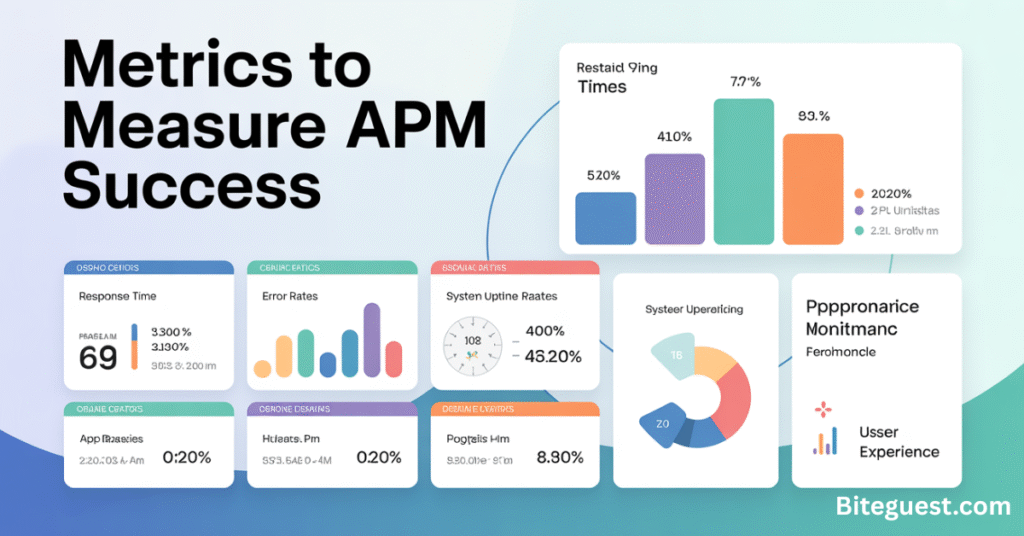
| Metric | Purpose |
| MTBF | Shows asset reliability |
| OEE | Checks performance and quality |
| Downtime Rate | Tracks asset unavailability |
| Maintenance Cost Ratio | Monitors maintenance costs |
| Energy Efficiency Rate | Measures energy use efficiency |
The Role of AI and IoT in APM (2025–2026)
The combination of artificial intelligence (AI) and the Internet of Things (IoT) has changed the way organizations conduct asset performance management (APM):
- IoT sensors are continuously measuring data from machines, vehicles, and infrastructure. AI algorithms analyze the collected data to identify patterns, anomalies, or risks that might otherwise go undetected. Predictive alerts enable the maintenance team to intervene and address issues before they lead to failure.
- In addition, machine learning models become increasingly predictive with the intake of more data, improving their ability to predict risk. Organizations can reduce downtime by 50 percent and increase asset utilization, on average, by 20-30 percent using this technology combination.
FAQs
1. What is the main purpose of Asset Performance Management?
The primary purpose of APM is to optimize the performance of assets in terms of reliability, reduce downtime, and enhance performance by utilizing advanced data analytics and predictive maintenance capabilities.
2. What is the contrast between APM and preventative maintenance?
Preventive maintenance is applied regularly or at periodic intervals, whereas APM utilizes real-time data and predictive analytics to determine when maintenance is needed.
3. Which industries reap the most from APM?
APM will reap the most benefits in industries that utilize large and/or critical assets, such as manufacturing, energy, transportation, oil & gas, and utilities.
4. What technology is needed for modern APM systems?
Modern APM is feasible due to the integration of IoT devices, cloud computing, AI, ML, and digital twin technology.
5. How can an organization measure APM success?
Some key metrics to consider include MTBF (Mean Time Between Failures), OEE (Overall Equipment Effectiveness), and percentage reductions in maintenance expenses.
Conclusion:
As we enter 2025 and 2026, Asset Performance Management (APM) will change the way organizations manage their most valuable assets. APM is no longer solely a maintenance tool; it is now a visioning tool, helping organizations not only look forward and prevent issues but also make informed decisions, improve performance, and pace “smart, data-based decisions.”
Your business can save costs, increase reliability, and support a sustainable and efficient future by leveraging APM products that leverage AI, IoT, and digital twins.