


Healthy kids mean healthy adults, and the predominant factor here is a healthy diet. What kids eat daily influences how their bodies grow, how their minds develop, how immune they are, how well they can learn, and how emotionally stable they are. Many concerned parents want nutritious meals for kids, though they are often confused by confusing information, “food” fads, and deceptive labels on packaged goods.
This children’s nutrition guide has been developed as a source of accurate and straightforward information on what children need from a nutritional standpoint as they vary in age, what they can eat to help them stay healthy and grow, what they should eat in moderation as part of a healthy diet, and how parents can help them adopt healthy eating practices in a stress-free manner. Eating healthily does not have to be costly or restrictive.
Why Healthy Nutrition Is Important for Children
Childhood is a stage of rapid growth. The bones begin to grow, muscles develop, and the brain builds connections every day. A well-nourished child gets all the fuel needed.
Good nutrition helps children:
- Grow at a healthy rate.
- Develop strong bones and teeth.
- Build immunity against illness.
- Improve memory and concentration.
- Maintain a healthy body weight.
- Develop positive food habits.
Poor nutrition can lead to frequent sickness, low energy, poor school performance, delayed growth, and long-term health risks. This is why early nutrition matters so much.
Basic Healthy Nutrients Children Need
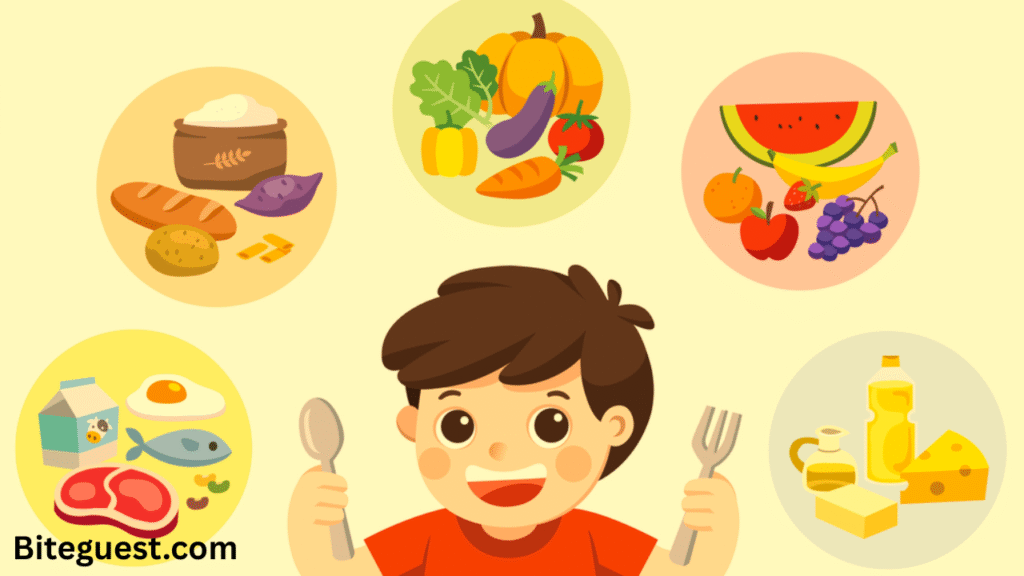
Children need the same types of nutrients as adults, but the amount depends on age, gender, and activity level. These nutrients work together to support growth and development.
Healthy Carbohydrates for Energy
Carbohydrates provide kids with energy for learning, playtime, and exercise. Healthy sources of carbs are whole foods.
Best sources include:
- Whole grains
- Fruits
- Vegetables
- Beans and lentils
Refined sugar and refined flour products give instant energy but very few calories. They must also be restricted.
Healthy Protein for Growth and Strength
Protein is essential for muscle growth, tissue repair, and immune function. Children need protein daily to support their growing bodies.
Healthy protein sources include:
- Eggs
- Fish
- Lean meat and poultry
- Beans and lentils
- Dairy products
- Nuts and seeds
Including protein in every meal helps children feel full and supports steady growth.
Healthy Fats for Brain and Hormone Support
Healthy fats are important for brain development, hormone balance, and vitamin absorption. Children should not avoid fats completely.
Good fat sources include:
- Milk and yogurt
- Nuts and seeds
- Olive oil
- Avocado
- Fatty fish
Unhealthy fats from fried and processed foods should be limited.
Vitamins and Minerals for Healthy Growth
Vitamins and minerals help protect children from illness and support normal body functions. Fruits, vegetables, dairy, whole grains, and protein foods naturally provide these nutrients.
Key nutrients for children include calcium, iron, vitamin D, vitamin A, zinc, and vitamin C
For detailed meal planning, parents can also refer to Personalized Diet Plans 2026: Achieve Better Health Easily to tailor meals to nutrient needs.
Healthy Nutrient-Dense Foods
Nutrient-dense foods provide high nutrition with fewer empty calories. These foods help children get the nutrients they need without overeating.
Examples include:
- Fresh fruits and vegetables
- Whole grains
- Eggs and lean proteins
- Low-fat dairy
- Beans and legumes
Choosing nutrient-dense foods supports healthy weight and better digestion.
Healthy Food Groups Children Should Eat Daily
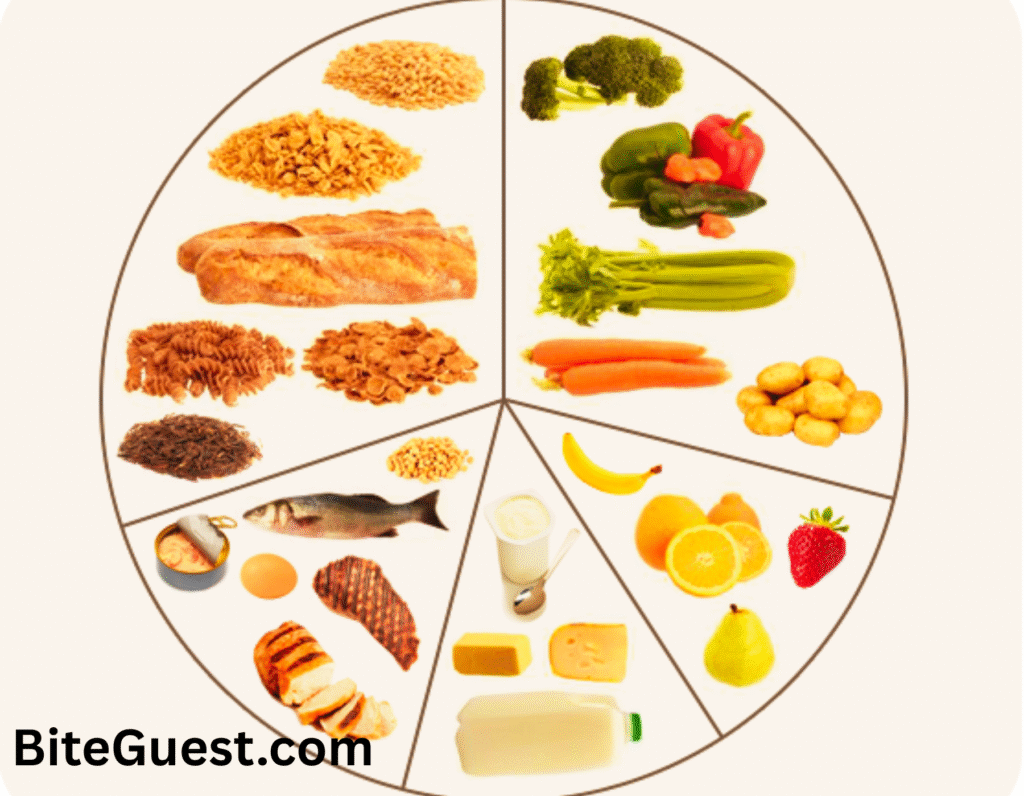
A balanced diet includes foods from all food groups. Each group plays a different role in child health.
Fruits for Natural Vitamins and Fiber
Fruits provide vitamins, antioxidants, and fiber. Children should eat different fruits throughout the week. Fresh, frozen, canned, and dried fruits are all healthy options. Canned fruits should be packed in water or natural juice.
Vegetables for Immunity and Digestion
Vegetables support digestion and immune health. Green leafy vegetables, carrots, peas, broccoli, cauliflower, tomatoes, and beans should be included often. Different colors provide different nutrients, so variety is important.
Grains for Long-Lasting Energy
Whole grains give children steady energy and fiber. Examples include:
- Whole-wheat bread
- Brown rice
- Oats
- Quinoa
- Whole-grain pasta
Refined grains should be eaten less often.
Dairy for Strong Bones
Milk, yogurt, cheese, and fortified soy beverages offer calcium and protein. Calcium and protein contribute to healthy bones and teeth. Nonfat and fat-free dairy products are preferred for children aged 2 years and older.
Protein Foods for Muscle and Repair
Protein sources help build muscle and boost immunity. A combination of animal and plant proteins can improve nutrient intake.
Foods to Limit in a Child’s Diet
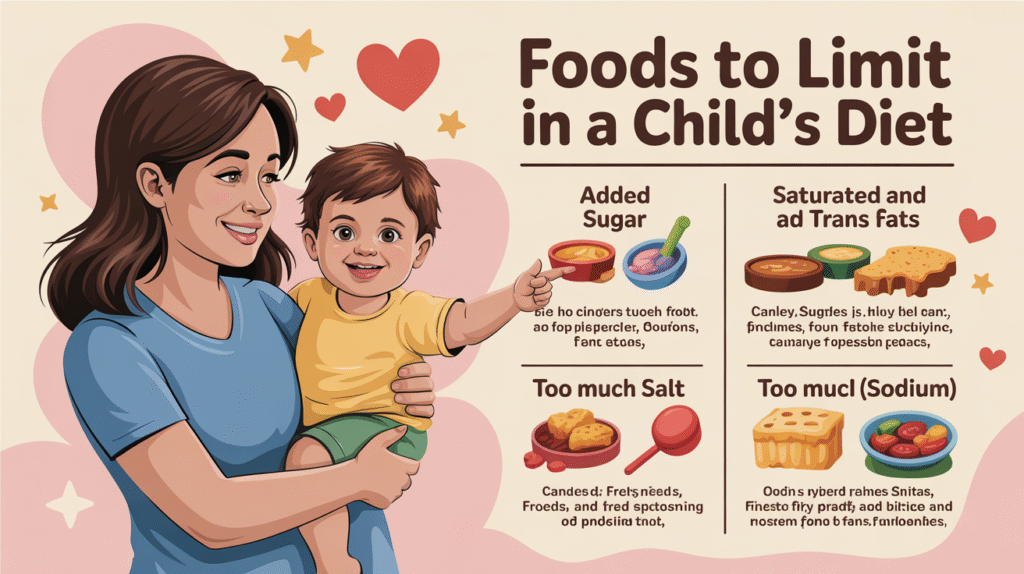
Some foods do more harm than good when eaten too often.
Added Sugar
Added sugars may promote cavities in the teeth, increase weight, and result in lack of energy. Foods high in sugar include drinks, candies, baked goods, and sweet breakfast foods. Sugars naturally occurring in fruits and milk are healthy and no need to be avoided.
Saturated and Trans Fats
These fats are found in fried foods, fast food, processed meats, and bakery items. Too much can affect heart health. Replacing them with healthier oils is better.
Too Much Salt (Sodium)
High sodium intake can affect blood pressure and kidney health. Many packaged foods contain hidden salt. Fresh home-cooked meals help control salt intake.
Daily Nutrition Guidelines for Children by Age and Gender
A child requires varying amounts of calories and nutrients depending on age. Age, sex, rate of growth, and activity level determine how much a particular kid requires for daily consumption. Parents can refer to the following tips to gauge how much nutrition they provide to their kid daily. All amounts given below are averages.
Ages 2 to 4: Daily Nutrition Guidelines for Girls
At this age, girls are growing fast and developing basic motor and thinking skills. They need small portions with high nutrition.
- Calories: 1,000 to 1,400 per day
- Protein: 2 to 4 ounces
- Fruits: 1 to 1.5 cups
- Vegetables: 1 to 1.5 cups
- Grains: 3 to 5 ounces
- Dairy: 2 to 2.5 cups
Ages 2 to 4: Daily Nutrition Guidelines for Boys
Boys in this age group may need slightly more calories if they are more active.
- Calories: 1,000 to 1,600 per day
- Protein: 2 to 5 ounces
- Fruits: 1 to 1.5 cups
- Vegetables: 1 to 2 cups
- Grains: 3 to 5 ounces
- Dairy: 2 to 2.5 cups
Ages 5 to 8: Daily Nutrition Guidelines for Girls

School-age girls need balanced meals to support learning, energy, and steady growth.
- Calories: 1,200 to 1,800 per day
- Protein: 3 to 5 ounces
- Fruits: 1 to 1.5 cups
- Vegetables: 1.5 to 2.5 cups
- Grains: 4 to 6 ounces
- Dairy: 2.5 cups
Ages 5 to 8: Daily Nutrition Guidelines for Boys
Active play increases calorie needs at this age, especially for boys.
- Calories: 1,200 to 2,000 per day
- Protein: 3 to 5.5 ounces
- Fruits: 1 to 2 cups
- Vegetables: 1.5 to 2.5 cups
- Grains: 4 to 6 ounces
- Dairy: 2.5 cups
Ages 9 to 13: Daily Nutrition Guidelines for Girls

This stage often includes early growth spurts. Iron, calcium, and protein become very important.
- Calories: 1,400 to 2,200 per day
- Protein: 4 to 6 ounces
- Fruits: 1.5 to 2 cups
- Vegetables: 1.5 to 3 cups
- Grains: 5 to 7 ounces
- Dairy: 3 cups
Ages 9 to 13: Daily Nutrition Guidelines for Boys
Boys may need more calories and protein due to faster muscle and bone growth.
- Calories: 1,600 to 2,600 per day
- Protein: 5 to 6.5 ounces
- Fruits: 1.5 to 2 cups
- Vegetables: 2 to 3.5 cups
- Grains: 5 to 9 ounces
- Dairy: 3 cups
Ages 14 to 18: Daily Nutrition Guidelines for Girls
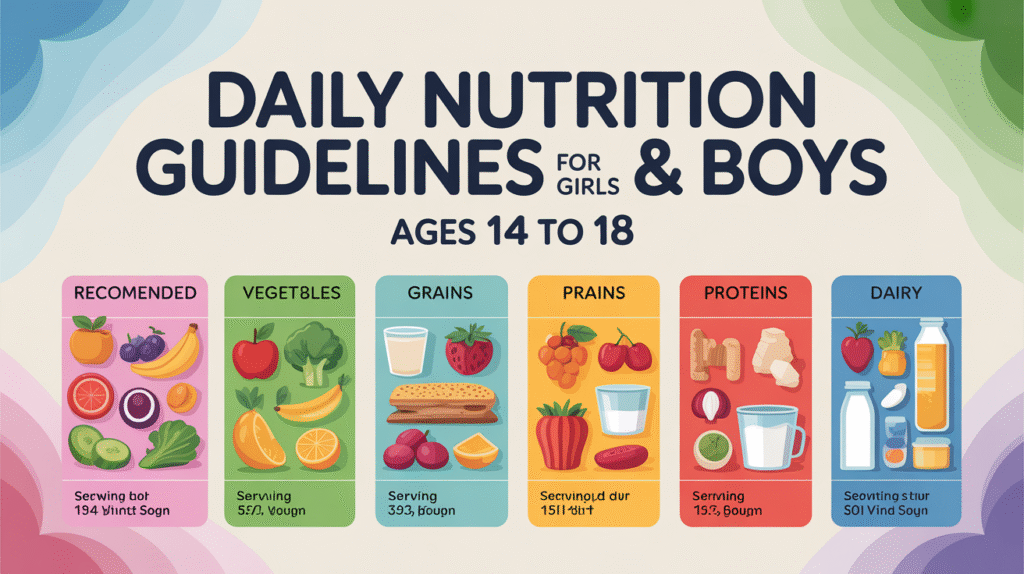
Teen girls need proper nutrition to support growth, hormones, and bone health.
- Calories: 1,800 to 2,400 per day
- Protein: 5 to 6.5 ounces
- Fruits: 1.5 to 2 cups
- Vegetables: 2.5 to 3 cups
- Grains: 6 to 8 ounces
- Dairy: 3 cups
Ages 14 to 18: Daily Nutrition Guidelines for Boys
Teen boys usually need the highest calorie intake due to rapid growth and high activity levels.
- Calories: 2,000 to 3,200 per day
- Protein: 5.5 to 7 ounces
- Fruits: 2 to 2.5 cups
- Vegetables: 2.5 to 4 cups
- Grains: 6 to 10 ounces
- Dairy: 3 cups
Importance of Breakfast for Children

Breakfast gives energy for learning and focus. Skipping breakfast can cause tiredness and poor school performance.
A healthy breakfast includes:
- Whole grains
- Protein
- Fruit or vegetables
Hydration and Water Intake
Children should drink water throughout the day. Drinking water helps children avoid tiredness and lack of concentration. Drinking water is the healthiest beverage choice.
Milk is also very helpful for nourishment. Sugary drinks should not be consumed excessively. Encourage your children to drink water during playtime and in school, as water is also an important.
Building Healthy Eating Habits Early
Children pick eating habits from the environment around them. Parents and guardians are sources of imitation. Good experiences influence positive habits in the future. Force creates detrimental habits.
Eating together promotes balance. Serve regular meals and snacks. Allow children to listen to their bodies when they are hungry. Healthy eating practices increase with age.
Managing Picky Eating
Picky eating can be a challenge, and this is a norm when it comes to child development. Most children often exhibit phases where they do not want a particular food and stick to just a few dishes. Remaining calm and composed helps children become less stressed when eating and even get interested in trying new dishes in time.
An other tip for parents dealing with picky eaters is to provide a variety of healthy foods and repeat exposure without forcing. Meals eaten together as a family, a routine for meal times, and being a good role model will help. Consistency and encouraging a child will go a long way in helping a child accept and enjoy a variety of foods.
Nutrition and School Performance
Nutrition promotes concentration and learning. Eating well prevents fluctuations in energy. Well-nourished children have a better chance of learning in class. Nutrition impacts mood and attention. Healthy eating promotes a full day of schooling. Protein and fiber boost attention. SUGAR CRASHES are avoided. Nutrition promotes academic achievement.
Conclusion
Proper nutrition is a very crucial aspect of a child’s growth. In light of a healthy diet, which should include a variety of vegetables, fruits, grain products, proteins, and diary products, a child will be able to get all the necessary nutrients to be active, learn, and even boost her/his concentration.
Establishing positive eating habits from the early years helps kids stick to a healthy lifestyle even when they get older. Some basic habits that can go a long way include eating homemade meals, eating on established meal times, and refraining from consuming high amounts of sugar. By being guided and persistent, one can ensure that their kids have positive eating habits.
FAQS
What are the nutritional guidelines for children?
The nutritional food guide that children should adhere to consists of a healthy diet rich in fruits, vegetables, whole grains, proteins, and dairy. The guidelines depend on the age and gender of the child.
What are the guidelines for a healthy diet?
An efficient nutritional regimen involves the practice of eating diverse nutrient-rich foods, limiting the intake of added sugar, salt, and unhealthy fats, among others.
What is a healthy diet for a child?
A well-balanced diet for a child includes supplying them with the energy and vitamins and minerals they require for growth and learning and immunity. A well-balanced diet consists of fruits, vegetables, grains, protein, and dairy.
What are the 10 nutritional guidelines?
The 10 guidelines for healthy eating are: eating a range of foods, picking nutrient-dense foods, cutting the amount of sugar and/or salt, and including protein, dairy products, whole grains, fruits, vegetables, and healthy fats in the diet in addition to drinking water.
What are the 8 guidelines for a healthy diet?
There are 8 guidelines for a healthy diet. These include: eat balanced meals, fruits and vegetables, whole grains, lean protein, avoid processed foods, avoid too much sugar and salt, drink adequate water, and eat in controlled portions.