

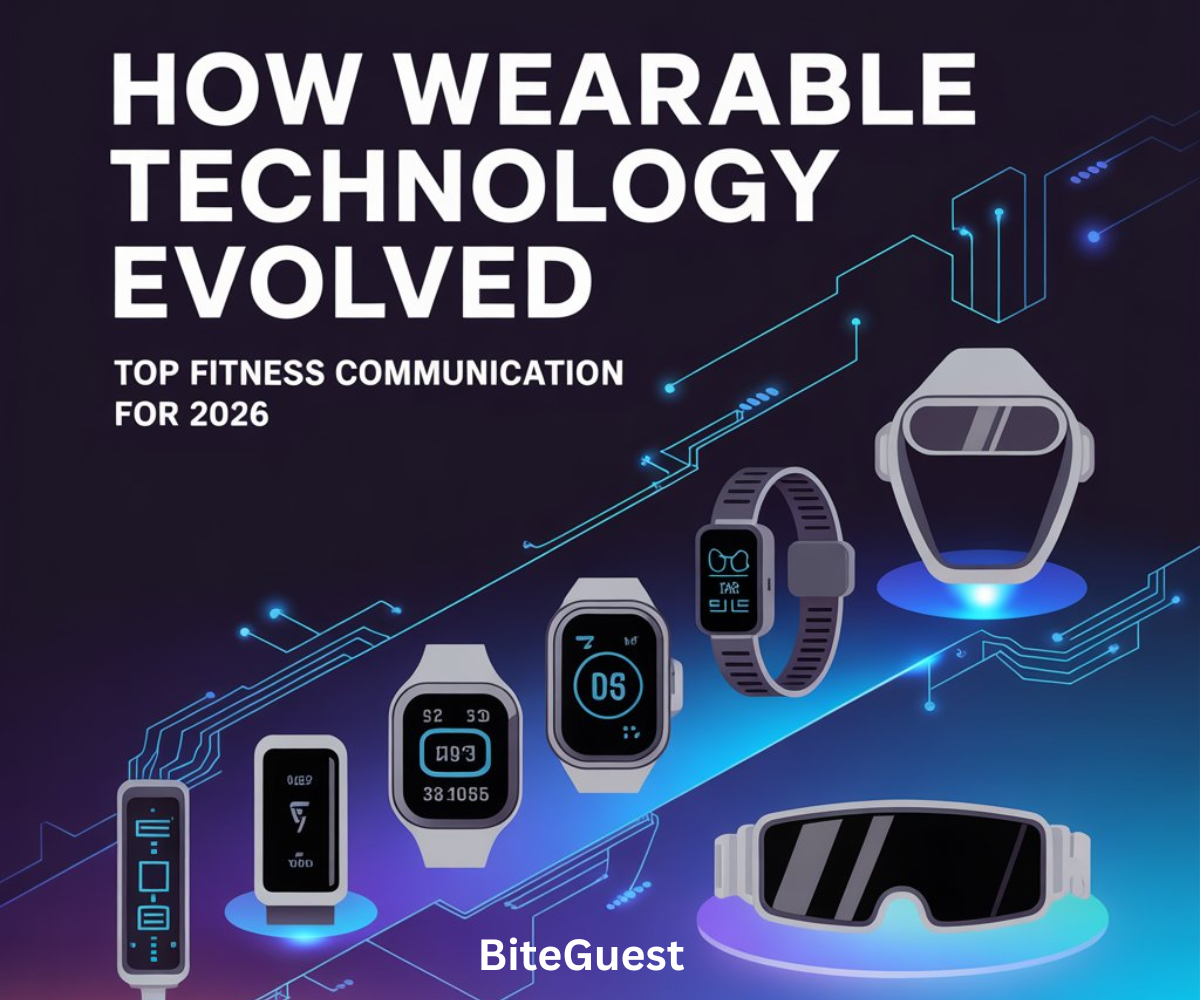
Wearable technology has had an effect on our lives, our work, and our communication that is nothing short of revolutionary. These smart devices have transcended the level of simple gadgets, integrating fitness monitoring, hands-free communication, and more into daily life. By 2026, not only will wearable technology be able to provide health monitoring but also professionals will be assisted to get in touch, human productivity will be improved, and life will be better.
The main products driving this change are smartwatches, fitness trackers, smart glasses, and even smart clothing. The likes of Apple, Fitbit, Samsung, and Meta are always coming up with new ideas in order to produce devices that would be both useful and pleasing to the eye. But how did we reach this point, and what can we expect in the days to come? The following text is a guide through the wearable technology’s evolution, its fitness and communication impact, and what is in store for users and professionals together.
What is Wearable Technology?
Wearable technology is defined as electronic devices that are worn on the body, which collect, store, and share data while executing tasks generally completed on phones or computers. Unlike smartphones, wearables allow users to engage with technology through interaction that does not require the use of their hands.
Modern devices often utilize integrated features like sensors, artificial intelligence, and connectivity. Wearables record activity, track health metrics, provide real-time notifications, and support communication across different devices. The intent is to make the integration into daily life as effortless as possible.
How Wearables Changed Over Time
Wearables began as step counters and basic fitness trackers. Through the years, smartwatches have been developed from their original functions into newer pieces of technology that can track heart rate, sleep patterns, measure stress levels, and connect to apps from the watch itself. Fitness trackers have since evolved and now provide in-depth reports regarding recovery time, activities, and health.
Smart glasses and AR technology are the next phase in wearable technology, providing users with the ability to view digital information in the real world. Head-mounted displays, or VR headsets, will facilitate immersive experiences through simulated engagement related to gaming, education, and training. Smart clothing is developing, which will allow individuals to control devices or track health metrics while wearing clothing that is typical and generally accepted in society as “normal” attire.
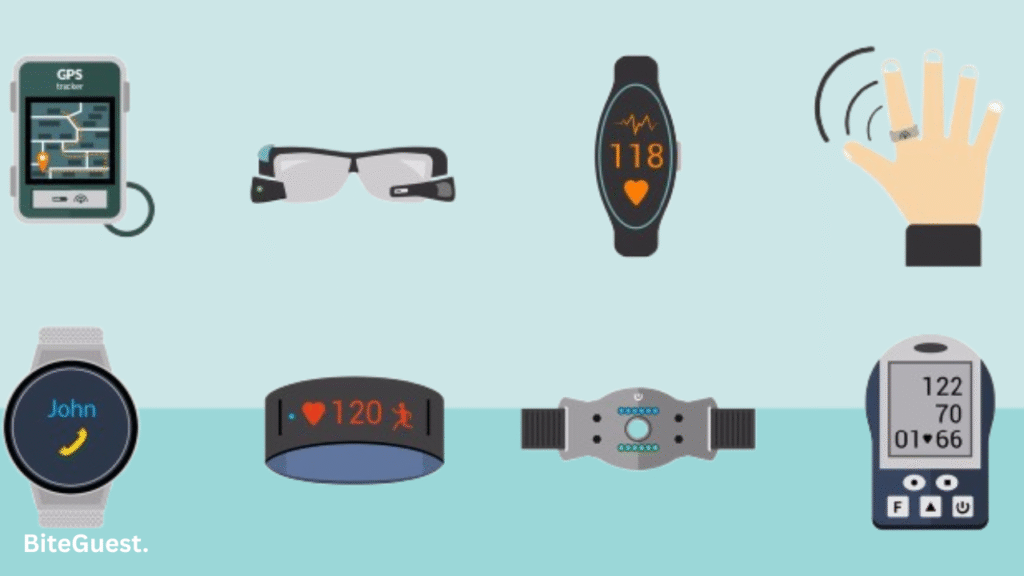
Popular Wearable Devices Today
1. Smartwatches
The Apple Watch, Samsung Galaxy Watch, and Fitbit are some of the smartwatches that have taken over the health and fitness category. They can measure:
- Steps and activity levels
- Heart rate and stress levels
- Sleep patterns
- Notifications and calls
Smartwatches bring physical activity, information, and connectivity to the users.
2. Fitness Trackers
Wearable fitness technology provides a wide range of monitoring—from workouts to recovery and health progress. It also offers AI-based coaching to help athletes improve performance. Moreover, AR and VR create more interactive and exciting fitness programs, thus accelerating users’ goal achievement.
You can discover more new exercise and wellness innovations in our article on Best Health and Fitness Trends.
3. Smart Glasses
Meta’s Ray-Ban smart glasses, Microsoft HoloLens, and other smart eyewear products are not only enhancing communication but also revolutionizing fitness. They are enabling interactions without using hands, offering live translations, and overlaying AR for creating engaging experiences.
4. Virtual Reality (VR) Headsets
Oculus Quest 2 and HTC Vive are examples of VR headsets that allow people to have fun while getting fit. The users can choose to take part in virtual training, engage in immersive workouts, or play fitness games.
5. Smart Clothing
Smart clothing is gradually rising to be the way to monitor fitness, health, and safety. Jackets, shirts, and shoes can not only track movement but also give feedback and even collect environmental data.
6. Hearables
Latest versions of Apple AirPods and Jabra Elite Sport are among the devices that record workouts, keep an eye on your heart rate, and serve as virtual assistants simultaneously. They come to users’ aid with connectivity and information without requiring phone use.
AI and Gesture Control in Wearables
Today’s wearables make use of artificial intelligence to deliver more intelligent and interactive experiences. One such product is Meta’s Ray-Ban smart glasses, which provide the following features:
- Real-time translations
- Live captions for calls and meetings
- Hands-free notifications and communication
Devices such as Neural Band, which relies on gesture control, allow users to operate their wearable devices through muscle signals. This interaction is very natural and useful, particularly in the case of fitness and professional users.
How Wearables Help Different Industries
1. Healthcare
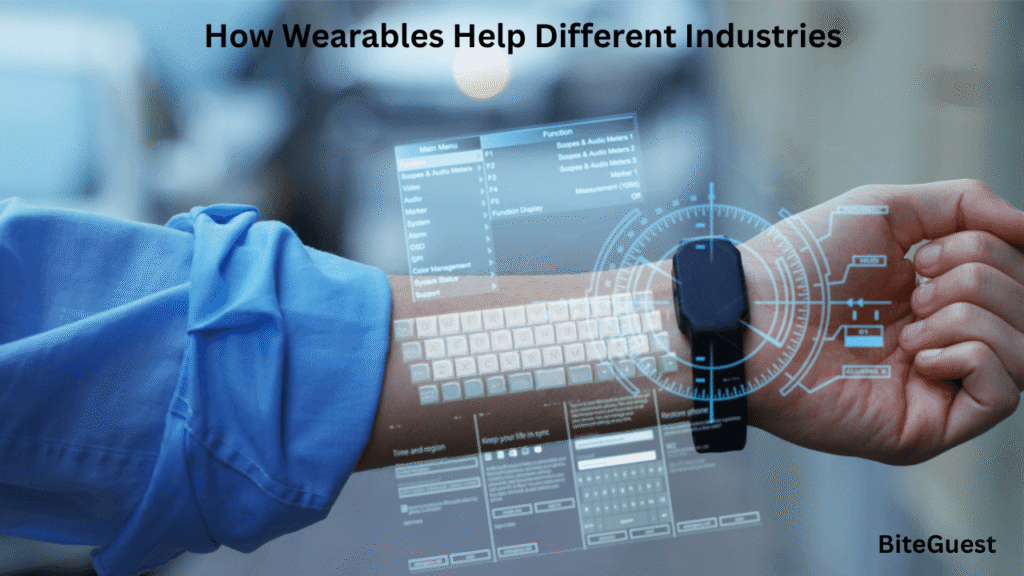
The role of wearables in healthcare is revolutionary. These devices are able to monitor heart rates, identify irregular heartbeats, and also keep track of fitness activities. With smart glasses, the physicians get to view the patient’s information without using their hands or even asking for the opinion of a colleague who is far away. Telemedicine and real-time monitoring have become much simpler and more accessible.
2. Communication
The communication scenario is quite different now that wearables have come to the scene. Smart glasses and smartwatches make it possible for people to make phone calls, send text messages, or even have video calls, all without their phones. This feature is particularly useful for professionals who are required to perform several tasks at once and still remain in touch.
3. Fitness and Sports
Wearable fitness technology provides a wide range of monitoring from workouts, recovery, to health progress. It also offers AI-based coaching as an additional tool to help athletes. Moreover, AR alongside VR has been used to create more interactive and exciting fitness programs, thus accelerating users’ goal achievement.
4. Work and Productivity
The use of wearables in the workplace leads to more efficient workers. A worker can answer a call, text, or take a note without breaking away from the task at hand. The retail, health care, and logistics industries are now among the sectors where the use of wearables is integrating workflow and customer service.
Entertainment and AR/VR Integration
The entertainment world has also benefited from wearables. In fact, AR and VR can be said to be the major contributors to immersive experiences in different segments, like gaming and virtual tours
- Gaming and virtual tours
- Fitness training with virtual coaches
- Interactive learning experiences
Artificial intelligence is the one that customizes these experiences for the user by considering workouts, entertainment, or education. By 2026, wearables would have conquered every sector with the provision of total interactive and captivating experiences.
The Future of Wearable Technology
1. Faster Networks with 5G
5G technology is going to uplift wearables in terms of speed and dependability. Henceforth, devices will have the luxury to stream 4K movies, continuously share data, and also be able to operate without any hiccups through collaboration with other smart gadgets.
2. Better Battery Life
Battery life has always been a thorny issue. But with the help of new battery technology, wearables will last longer than ever before on a single charge, making it more hassle-free for consumers to use them daily.
3. Connected Devices with IoT
Wearables will be linked to the Internet of Things (IoT). They will communicate with smart houses, cars, and hospitals, thereby giving consumers the feeling of a very fluid and integrated experience.
4. Smarter AI and Personalized Experiences
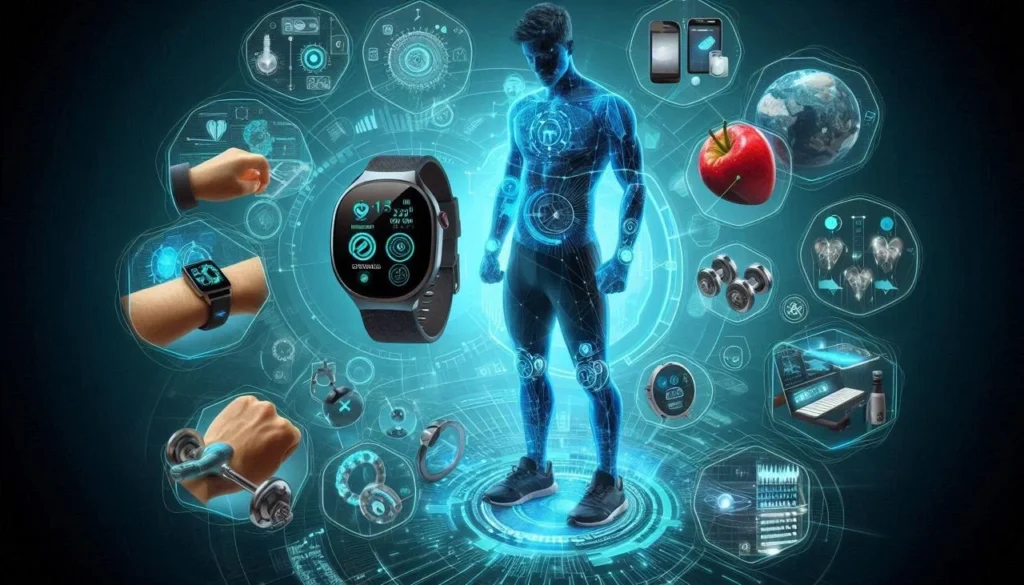
Wearables will be made smarter by AI. Devices will identify health problems, offer personal training, and adjust to the user’s lifestyle. Wearables will thus become more user-friendly and indispensable in everyday life.
5. Immersive AR and VR Experiences
AR and VR are technologies that will not let go of the market. Fitness, education, and entertainment will be more hands-on than ever. The audience will be the one enjoying the most realistic experiences and gaining more from them, either in learning or training.
Careers in Wearable Technology
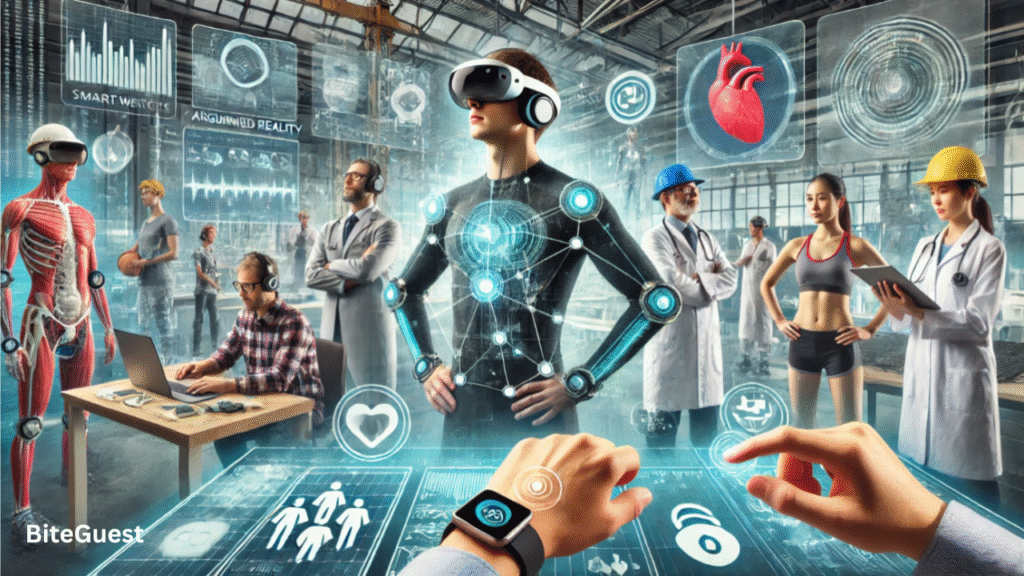
Wearable technology is opening up new career paths. The fields of engineering, AI, data analytics, and design are all in need of professionals.
Engineers
Engineers are the ones who come up with and build wearable devices. They deal with hardware and software and work on making the devices lightweight and power-efficient.
AI and Machine Learning Specialists
AI professionals are responsible for making systems that learn users’ patterns and provide useful support. Those who work with AI make the devices not only more intelligent but also quicker in response.
AR Designers
AR designers develop digital layers that consist of the real world. They make sure that the interactions are simple and also that they contribute to user satisfaction.
Data Analysts
Wearable devices generate a lot of data, and the data analysts are the ones who will interpret it. Their insights will not only help in making the devices better but also in leading the customers to achieve better results.
Learning and Skills
The wearable technology sector is a rapidly growing one. Professionals have to constantly update their knowledge and skills in AI, AR/VR, UX, and data analysis. Besides, online courses, certifications, and workshops are recommended to keep one’s knowledge up to date.
Preparing for the Wearable Tech Future
Successful professionals in the wearable tech industry should prioritize the following areas:
- Embedded Systems Engineering: Create the hardware and software for the wearable tech.
- Human-Computer Interaction: Make the devices simple to use and friendly to the users.
- Research and Development: Create new ones, apply AI, and make better batteries.
Being aware of trends, trying out gadgets, and constant education will be the major decisive factors in being ahead. The wearables will keep on affecting the fitness, communication, healthcare, and man’s daily production sectors.
Conclusion
Wearable tech has progressed from basic pedometers to sophisticated gadgets capable of enriching fitness, health, communication, and entertainment areas. In 2026, the devices will reach the highest point of their evolution, being super fast, super smart, and super connected. The combination of AI, AR, and gesture controls will allow the wearables to be interactive and intuitive.
Wearables have transformed from mere gadgets to indispensable tools that enhance everyday life. Professions and consumers accepting this technology now will experience health, productivity, and communication improvements. The future of fitness communication is hands-free, personalized, and completely connected. Wearables are the force behind a more intelligent and healthier planet.
FAQS
How do wearables improve fitness communication?
Wearables give tracking in real-time, AI coaching, and hands-free guiding, creating a connection and making the users more motivated during workouts.
Can wearable devices monitor health effectively?
Certainly, wearables have the capability to supervise heart rate, sleep, steps, and even detect abnormalities, which can be a great help not only to users but also professionals in managing health issues proactively.
How do smart glasses help in daily life?
Smart glasses, such as Meta’s Ray-Ban, provide a range of functions such as hands-free communication, captioning in real-time, and augmented reality navigation, assistance at work, and fitness.
Are wearables useful for professional work?
Yes, wearables double the productivity, as they enable hands-free calls, notifications, and quick access to the data in healthcare, retail, and logistics.
What is the future of wearable technology?
The future wearables will depend on 5G, IoT, enhanced battery life, AI, and Ar to present users with seamless, interactive, and connected experiences.