

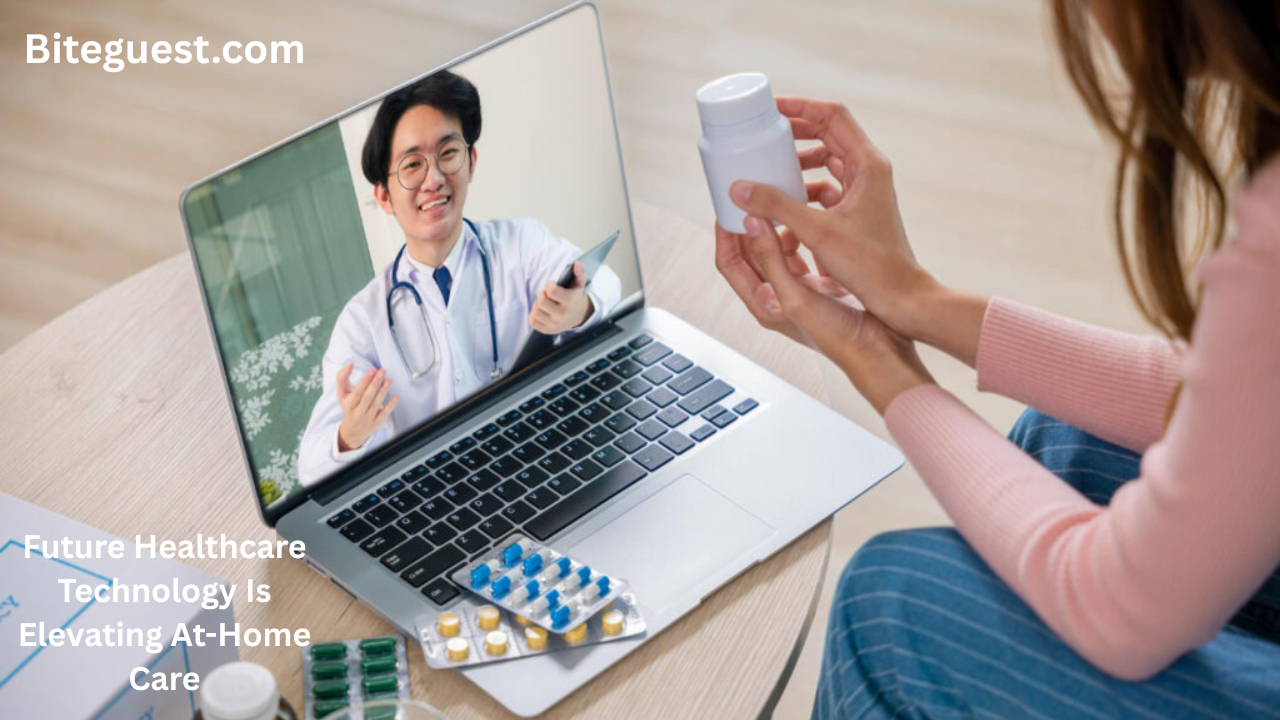
The practice of caring for patients at home is becoming a leading sector in the medical field. More people now prefer receiving healthcare at home, where they feel comfortable, rather than visiting clinics repeatedly. Today, advanced tools, smart devices, and innovative digital systems make this possible. Healthcare Technology empowers patients to monitor their health, consult doctors online, and manage long-term conditions efficiently.
This shift not only reduces the burden on patients but also gives them greater control over their health. From remote monitoring and AI-driven diagnostics to smart wearable devices and virtual platforms, home healthcare has a strong future. This article explores how these innovations are shaping at-home care, improving patient outcomes, and making healthcare more accessible..
What is the Power of Healthcare Technology in At-Home Care
Healthcare is shifting from hospital-centered treatment to home-based care. Patients increasingly choose to receive treatment at home, which reduces stress and travel. An aging population, an increase in chronic conditions, and innovations in Healthcare Technology drive this trend.
Modern tools, such as wearable trackers, remote monitoring devices, and telehealth platforms, enable patients to receive continuous care without leaving home. Early detection of health problems becomes possible, enabling timely interventions and personalized treatment plans.
What’s Driving the Growth of Home Healthcare?
Several factors are accelerating the adoption of at-home healthcare:
- Technological advancements, including AI, IoT devices, and robotics, enhance home care, making it more precise and effective.
- Patient Preference: Many individuals prefer home care for its comfort, privacy, and convenience.
- Aging Population: Older adults often require ongoing monitoring, which is more easily accomplished at home.
- Technological advancements, including AI, IoT devices, and robotics, enhance home care, making it more precise and effective.
- Patient Preference: Many individuals prefer home care for its comfort, privacy, and convenience.
- Aging Population: Older adults often require ongoing monitoring, which is more easily accomplished at home.
Why At-Home Care Is Becoming More Important
Home-based care is increasingly popular globally due to aging populations, rising healthcare costs, and the demand for convenience. Key advantages include:
- Reduced stress for patients who prefer staying at home.
- Prevention of hospital overcrowding.
- Continuous monitoring for chronic illnesses.
- Increased independence for older adults.
The transition to Advanced Healthcare Technology has only one way to go: it will be faster, safer, and better-connected medical care. Digital systems, wearable devices, and virtual platforms come together to enable caregivers to track patients’ conditions in real-time, thereby elevating the overall quality of home healthcare.
How Future Technologies Are Transforming At-Home Care
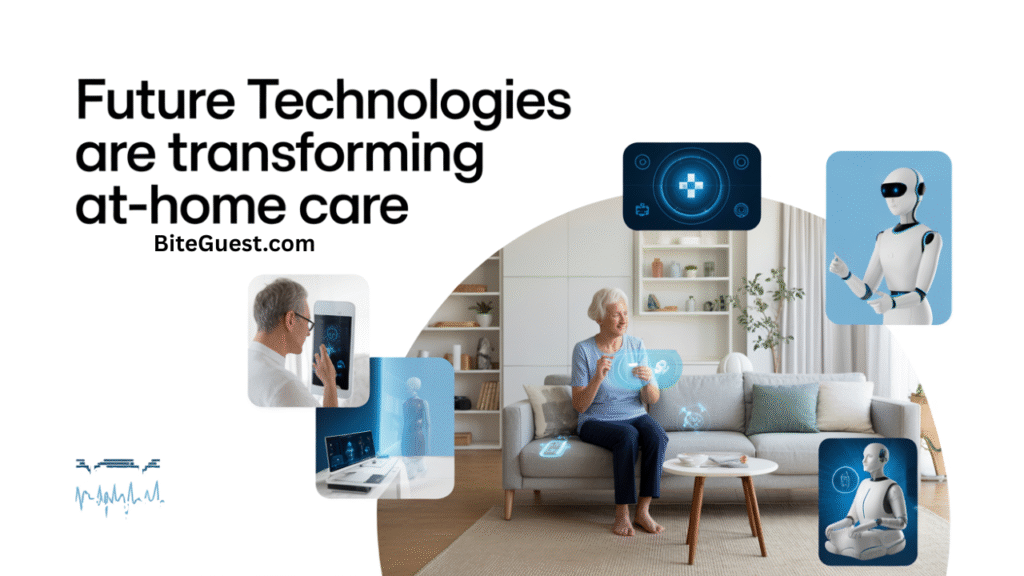
1. Remote Patient Monitoring (RPM)
Remote Patient Monitoring uses wearable devices to track vital signs such as heart rate, blood pressure, glucose levels, and oxygen saturation. This data is transmitted in real-time to doctors or caregivers, allowing early intervention when abnormal readings appear. Continuous monitoring reduces unnecessary hospital visits and improves chronic disease management.
Example: A patient with heart disease may wear an ECG monitor that records heart rhythms. If an irregularity occurs, the device alerts the doctor instantly, allowing timely guidance.
2. Wearable Devices & Smart Health Trackers
Wearables, including smartwatches, fitness trackers, and bright patches, continually supervise health metrics such as heart rate, physical activity, sleep patterns, and stress levels. Both patients and caregivers can access this data at any time, enabling them to make more informed decisions about their health and treatment.
Example: Devices like the Apple Watch and Fitbit can detect atrial fibrillation, monitor heart rate variability, and provide insights into overall cardiovascular health.
3. Telehealth and Virtual Consultations
Telehealth is a modern technology that enables patients to communicate with their doctors via video calls, messaging, or remote monitoring. It allows patients to receive consultations, follow-ups, and even prescriptions without leaving their homes.
Benefits include:
- Reduced hospital visits
- Immediate access to healthcare providers
- Continuous management of chronic conditions
Telehealth is particularly beneficial in rural or underserved areas where a shortage of specialists may exist.
4. Smart Home Medical Devices
Smart devices, such as automated pill dispensers, smart beds, and voice-activated assistants, improve daily healthcare management. These devices enhance medication adherence, track vital signs, and help patients maintain a structured health routine.
Example: Intelligent pill boxes alert patients when to take their medications, reducing the chance of missed doses.
5. Robotics and Automation in Home Care
Robots assist the elderly and individuals with physical disabilities with activities such as dressing, bathing, and mobility. They may also help in the rehabilitation process by exercising and providing companionship, thus reducing one’s feelings of isolation and mental stress.
Example: Paro, a therapeutic robot seal, provides emotional support for dementia patients, helping lower anxiety and improve overall well-being.
6. Personalized Medicine Through Genetic Insights
The combination of genetic testing and AI-driven analytics enables the development of highly individualized treatment plans. Knowing a patient’s genetic makeup helps ensure that drugs and therapies are not only practical but also safe, and it aids in improving the patient’s overall health.
For example, when doctors have genetic insights, they can prescribe the right type and amount of medication for patients with chronic conditions, thereby guaranteeing the safety and efficacy of the treatment.
7. 3D Printing for Home Medical Supplies
The 3D printing technology offers the possibility of creating patient-specific prosthetics, implants, and even precise medication dosages. It is now possible for patients to receive customized medical supplies delivered directly to their homes, thereby reducing the frequency of hospital visits.
Example: 3D-printed prosthetics and orthotics are tailored to a patient’s anatomy, providing better comfort, fit, and mobility.
8. Blockchain for Secure Health Data Sharing
The utilization of blockchain technology guarantees that patient data is securely stored and cannot be tampered with. Patients will be able to share their medical records without any risk of privacy invasion or fraud, while doctors and caregivers have access to the records.
Example: MedRec, a blockchain platform, lets patients control access to their health information, ensuring secure home care management.
9. Care Coordination Apps
Coordinating care is considered the most effective tool for organizing the individuals involved in the healthcare process, including patients, their families, and healthcare providers. The apps track medications, checkups, vital health signs, and the entire treatment process. Additionally, they facilitate patients’ contact with doctors and medical staff, thereby preventing delays and enhancing the quality of care.
Example: Apps like CareZone enable patients to track their prescriptions, set reminders, and share updates with caregivers, thereby reducing errors and improving adherence.
What are the different types of remote monitoring?

| Tool Type | Function |
| Wearables | Monitor heart rate, activity, and sleep |
| Glucose Monitors | Track blood sugar continuously |
| Smart Blood Pressure Cuffs | Record and transmit readings automatically |
| Oxygen Saturation Monitors | Detect oxygen levels and alert caregivers |
| ECG Monitors | Identify irregular heartbeats in real time |
These advanced tools provide patients with real advantages, from early detection to improved chronic disease management.
Benefits of Future At-Home Care Innovations

- Better Access to Care: Patients in remote areas can connect with specialists instantly.
- Higher Patient Independence: Smart tools allow people to manage their health confidently.
- Stronger Disease Prevention: Continuous monitoring detects issues before they worsen.
- Enhanced Safety for Seniors: Automated reminders and alerts reduce risks.
- Faster Emergency Responses: AI alerts notify caregivers or doctors within seconds.
Future Trends Shaping At-Home Care Over the Next 10 Years
Home healthcare is expected to evolve significantly:
- AI-powered predictive analytics will warn patients of potential health risks.
- Robotics will assist with daily tasks, rehabilitation, and companionship.
- Wearables will become more advanced, integrating multiple health parameters.
- Personalized medicine and 3D printing will make treatments safer and more effective.
- Improvements in blockchain technology and cybersecurity will not only safeguard patient data but also facilitate seamless sharing among medical staff.
- The use of VR and AR technology will make rehabilitation, social interaction, and mental health programs more attractive and practical.
Real-Life Examples of At-Home Tech Success
- Diabetes Management: Continuous glucose monitors predict dangerous spikes.
- Cardiac Care: Early arrhythmias can be detected by home ECG devices, helping to prevent emergencies.
- Senior Wellness: Systems for fall detection notify families, leading to a shorter recovery time and improved overall well-being.
- Mental Health: AI chatbots provide check-ins, meditation instructions, and stress assistance.
- Chronic Lung Disease: Intelligent inhalers are used to track and monitor dosage intake.
The benefits of home healthcare technology are clearly visible through these examples.
Conclusion:
The healthcare of the future will be personalized, proactive, and intelligent. Remote monitoring, wearable devices, AI assistants, and predictive analytics are among the innovations transforming homes into health hubs. The increase in Healthcare Technology is altering both the medical field and the daily lives of people.
Individuals will be able to more accurately monitor their health, live independently, and stay in touch with medical assistance simply by accepting these tools. Families will be comforted by the fact that technology increases the safety and awareness, along with the patients who will receive more personalized and data-driven care.
As technology advances, the home will become the focal point of health management, making wellness more accessible, efficient, and responsive to the population’s needs than ever before.
FAQS
Q1: What is remote patient monitoring, and how does it work?
Remote patient monitoring utilizes wearable devices and smart sensors to track vital signs, which transmit data in real-time to healthcare teams for continuous monitoring.
Q2: How do wearable health trackers improve home care?
Wearable devices track heart rate, activity, sleep, and other key health metrics, enabling patients and caregivers to make informed decisions about their health.
Q3: What is the role of AI in at-home healthcare?
AI aids in predicting health risks, provides medication reminders, analyzes patterns, and offers timely insights into healthcare for preventive care.
Q4: How does blockchain help in healthcare at home?
Blockchain provides secure storage of health data and grants access to, while verifying, legitimate patient records that are definitive and tamper-proof.
Q5: What future technologies will further enhance home healthcare?
Emerging trends are advanced wearables, robotic assistance, VR and AR rehabilitation, 3D printing, predictive data, and personalized medicine.