

Digital marketing is no longer driven only by creativity and manual effort. Data, speed, and accuracy now play a central role. This is where artificial intelligence comes into play. From search results and social media feeds to ads and email inboxes, AI is quietly shaping almost every digital interaction we see today. How Does Artificial Intelligence Impact Digital Marketing? This question matters because AI is no longer optional for brands that want to grow, compete, and stay visible online.
Artificial intelligence helps marketers better understand users, create relevant content faster, and make smarter decisions using real data. It does not replace human marketers. Instead, it supports them by removing guesswork and improving efficiency. This article explains how AI is changing digital marketing, where it adds real value, and what the future holds.
What Is Artificial Intelligence?
Artificial intelligence is the ability of machines to learn from data, recognize patterns, and make decisions with little human input. AI systems improve over time as they process more information.
In digital marketing, AI is used to analyze customer behaviour, predict trends, personalize content, automate tasks, and optimize campaigns. AI works behind the scenes in search engines, social platforms, advertising tools, and analytics software. Most marketers already use AI-powered tools, even if they do not always realize it.
How Has AI Changed in The Past Year?
AI technology has evolved rapidly in the last year. Tools have become faster, smarter, and more accurate. Generative AI now produces content that sounds more natural and matches search intent better than before.
SEO tools use AI to understand user intent rather than focusing solely on keywords. Advertising platforms increasingly rely on machine learning to optimise bids, placements, and audience targeting in real time. Analytics tools now provide predictive insights, helping marketers plan future campaigns rather than relying solely on past data.
Another major change is the growth of AI-powered search results, where answers appear directly on search pages. This has pushed marketers to focus more on content quality and relevance.
How Are Companies Using AI in Digital Marketing?
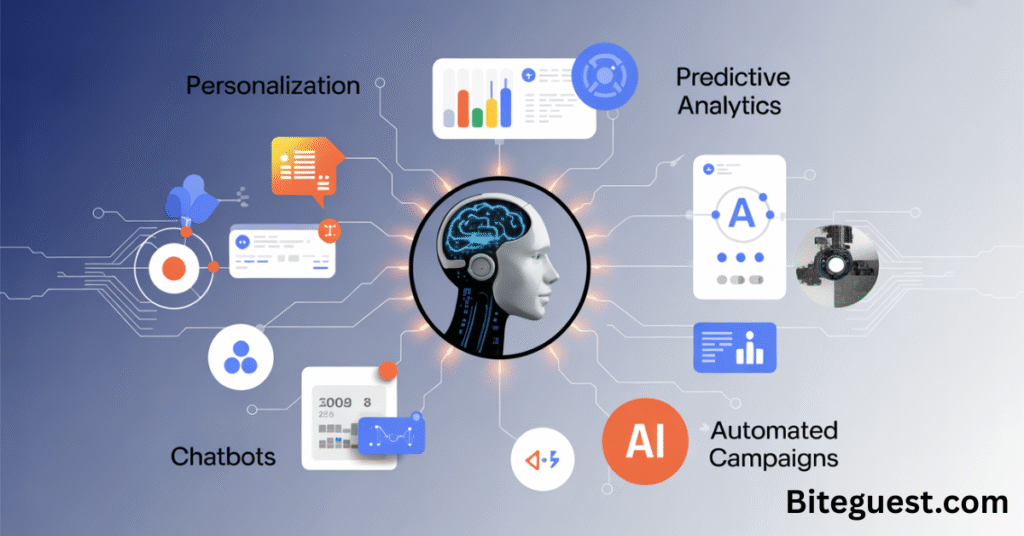
Companies across industries use AI to improve efficiency and customer engagement. AI helps brands deliver the right message at the right time through the right channel.
Conversational AI and Chatbots
Conversational AI allows brands to communicate with users instantly. Modern chatbots understand context and provide natural responses. They answer questions, guide users, and support customer service without delays. This improves the user experience and saves support teams time.
Content Generation and Optimization
AI helps marketers create and improve content faster. It assists with topic ideas, outlines, readability, and search engine optimization. AI also helps match content tone and structure with user intent, making content more engaging and relevant.
Predictive Analytics and Personalization
Predictive analytics uses AI to analyze user behavior and forecast future actions. This allows brands to personalize content, offers, and messages. Personalization improves engagement by showing users what matters most to them.
Image and Video Generation
AI tools now help create images and videos without traditional design work. These tools support faster content production and creative testing. Marketers can quickly adapt visuals for different platforms and audiences.
AI in Ad Targeting and Media Buying
AI has transformed paid advertising by removing much of the manual work. Advertising platforms analyze user behavior, engagement patterns, and performance data in real time.
This helps brands achieve several key goals:
- Better audience targeting based on real behavior
- More intelligent budget allocation to high-performing ads
- Improved return on ad spend through continuous optimization.
These improvements help businesses use their ad budgets more wisely.
Social Media Management Tools
AI helps manage social media by analyzing trends, suggesting captions, and scheduling posts. It also tracks engagement patterns and helps brands understand what content performs best.
Email and Marketing Automation
AI-powered email tools personalize subject lines, content, and send times. Emails are triggered based on user behavior, making communication more relevant and timely. This improves open rates and conversions.
Customer Insights and Market Research
AI analyzes reviews, comments, and online conversations to understand customer sentiment. It also tracks competitors and industry trends. These insights help marketers make informed decisions and adjust strategies quickly.
AI-driven market research allows brands to respond to customer needs faster than traditional methods.
Benefits of Using AI in Digital Marketing
AI delivers clear advantages for modern marketers by improving speed, accuracy, and scalability.
The main benefits include:
- Faster decision-making through real-time data analysis
- Higher engagement through personalized content and ads
- Increased productivity by automating repetitive tasks
When used correctly, AI helps marketers focus on strategy and creativity instead of manual work.
Drawbacks and Ethical Considerations of Using AI
Despite its advantages, AI also brings challenges. Over-automation can lead to content that feels robotic if not reviewed by humans. Maintaining brand voice remains important.
Data privacy is another primary concern. AI systems depend on user data, so brands must follow privacy laws and protect personal information. Algorithm bias is also a risk if training data is incomplete or unbalanced.
Responsible AI use requires transparency, fairness, and human oversight.
How to Use AI Strategically (and Responsibly)
AI should act as a support tool, not a replacement for human judgment. Marketers should use AI for research, automation, and analysis while keeping control over messaging and strategy.
Best practices include:
- Reviewing all AI-generated content before publishing
- Using AI insights to guide decisions, not blindly follow them
- Training teams to understand AI limitations and ethics
This balanced approach ensures efficiency without losing authenticity.
Future Trends in AI and Digital Marketing
The future of AI in digital marketing will focus on deeper personalization and more intelligent automation. Voice search and conversational experiences will continue to grow. Answer-based search optimization will become more important.
AI will also integrate more with emerging technologies such as virtual experiences and interactive content. Predictive marketing will help brands meet customer needs before they are clearly expressed.
Final Thoughts
Artificial intelligence is transforming digital marketing in ways that were unimaginable just a few years ago. It helps marketers make data-driven decisions, personalize content, and optimize campaigns more efficiently. While AI offers many benefits, human oversight and creativity remain essential to maintain authenticity and brand voice. The ethical use of AI and the responsible handling of data are critical for long-term trust. Overall, when used wisely, AI becomes a powerful tool that enhances marketing strategies and drives better results.
FAQS
How does artificial intelligence affect digital marketing?
AI affects digital marketing by analysing data, personalising content, and automating tasks to enhance engagement and improve campaign performance.
What AI tools are used in digital marketing?
Common AI tools include chatbots, predictive analytics platforms, content generators, social media schedulers, and ad optimization software.
How is AI changing digital marketing in 2026?
In 2026, AI will enable deeper personalization, predictive campaigns, voice search optimization, and automated content creation at scale.
What are the benefits and challenges of using AI in digital marketing?
Benefits include efficiency, personalisation, and data-driven insights; challenges include maintaining brand voice, ensuring privacy, and avoiding algorithmic bias.
What are the three issues of using AI in digital marketing?
The three main issues are data privacy concerns, algorithmic bias, and the risk of producing generic or robotic content without human oversight.