

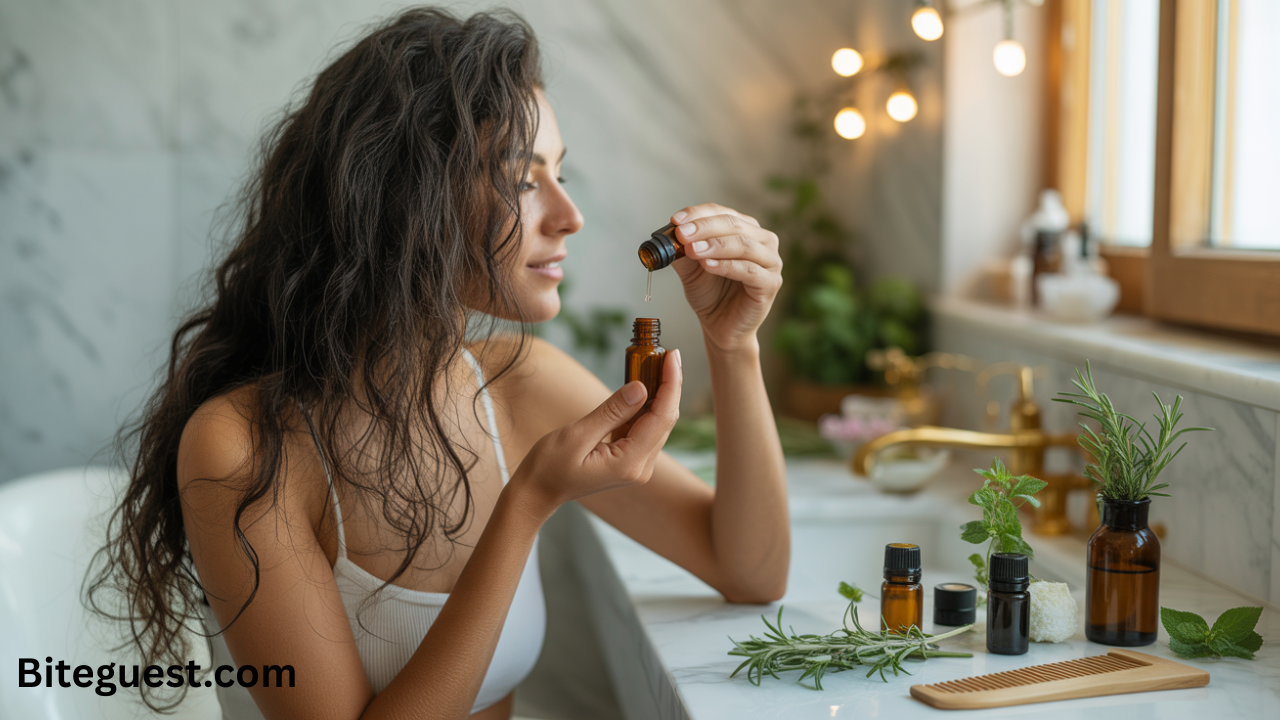
Healthy hair growth requires proper nutrition, scalp care, and natural support. Nowadays, many people are turning to natural remedies, and essential oils are among the most trusted. Derived from plant extracts, these oils stimulate blood circulation, moisturise hair follicles, and help maintain a clean, healthy scalp.
Because essential oils are potent yet gentle, they have become increasingly popular as natural hair-care solutions. This guide will help you understand which essential oils support hair growth, how they work, and the best ways to use them. You will also learn about their benefits for scalp circulation, root development, and overall hair health.
What Are Essential Oils?
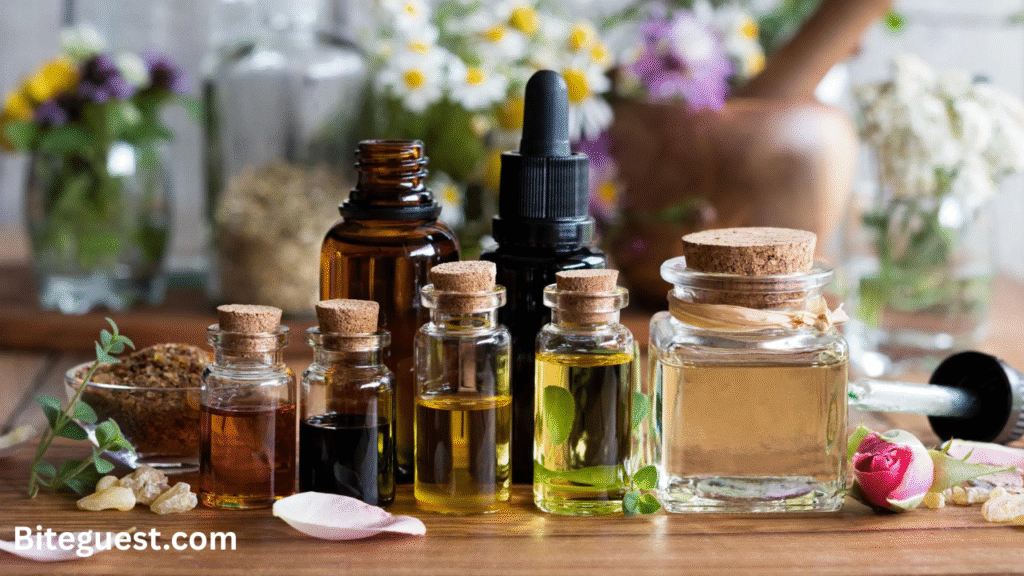
“Essential oils are plant concentrates that are obtained either by steam distillation or cold pressing. These oil are able to encapsulate all the naturally found elements of a variety of plants. Every oil has a distinct composition, and that’s why some oil promotes growth, whereas others can relieve pain as well as maintain a healthy scalp.”
However, essential oils are highly concentrated, so they must always be mixed with a carrier oil, such as coconut, almond, jojoba, or castor oil. When combined, these oils enhance blood flow to the scalp, reduce dryness, and strengthen hair roots.
How Essential Oils Support Growth
Improved Blood Flow to the Scalp Hair Growth
One of the main benefits of essential oils is their ability to stimulate blood flow. Better circulation delivers more oxygen and nutrients to hair follicles, keeping them healthy and active. This improves hair growth naturally and supports thicker, stronger strands.
Stronger Roots and Follicle Support Hair Growth
Many essential oils are rich in antioxidants, vitamins, and fatty acids. These nutrients strengthen hair roots and reduce breakage, which prevents weak, fragile strands.
Reduced Inflammation and Irritation Hair Growth
Inflammation slows hair growth and damages follicles. Oils with anti-inflammatory properties, such as lavender and clary sage, soothe irritation and create a balanced scalp environment.
Better Scalp Environment Hair Growth
Excess oil, dirt, and product buildup can block follicles. Essential oils cleanse the scalp, remove buildup, and create a clean, nutrient-rich environment for hair growth.
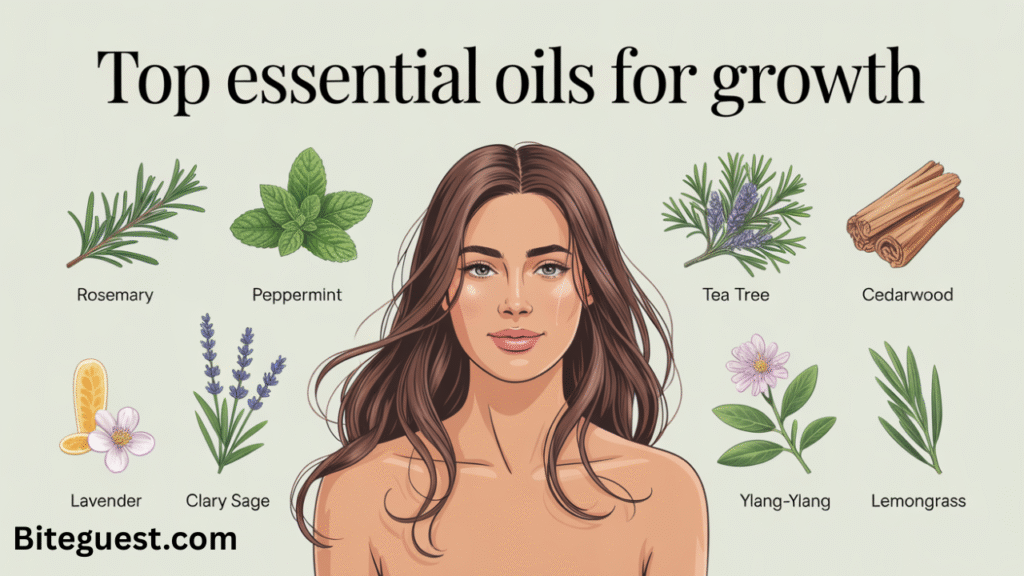
Top Essential Oils for Growth
Rosemary Essential Oil Hair Growth
Rosemary oil is one of the most studied oils for hair growth. It enhances circulation, protects follicles, and reduces scalp dryness. Studies show rosemary oil can be as effective as some traditional hair growth products.
Benefits:
- Strengthens hair roots
- Promotes thicker hair
- Reduces dryness and scalp irritation
Peppermint Essential Oil Hair Growth
Peppermint oil has a cooling sensation that gives immediate circulation a boost. It also calms irritated scalps and promotes denser, thicker hair. Another benefit of peppermint oil as a hair supplement is its refreshing sensation when massaged properly.
Lavender Essential Oil Hair Growth
Lavender essential oil has a relaxing, stress-relieving effect that also indirectly promotes growth, as stress can hinder growth patterns. This oil also helps balance the scalp’s natural oil secretion.
Benefits:
- Improves circulation
- Supports thicker, stronger hair
- Refreshes the scalp
Tea Tree Essential Oil Hair Growth
“Tea tree oil has cleansing properties.” This oil helps keep the scalp clean by reducing buildup, flakiness, and impurities. “A clean environment translates to a healthy and actively functioning root.”
Benefits:
- Cleanses and unclogs follicles
- Reduces dandruff
- Promotes a healthy scalp
Cedarwood Essential Oil Hair Growth
Cedarwood oil helps balance sebum secretion; hence, it suits both a dry and an oily scalp. Additionally, it promotes hair growth by strengthening hair roots and combating inflammatory conditions in hair follicles. Thereafter, it combines well with lavender oil and rosemary.
Benefits:
- Supports strong hair roots
- Reduces inflammation
- Improves hair thickness
Clary Sage Essential Oil
Clary Sage contains linalyl acetate, which soothes irritation and promotes a healthy scalp. Clary Sage supports robust root development and provides a well-balanced environment.
Benefits:
- Reduces irritation
- Supports follicle health
- Improves scalp balance
Ylang-Ylang Essential Oil
Ylang-ylang oil suits dry scalps. It promotes the body’s natural production of oil on your skin, helping to moisturize your roots. When mixed with coconut oil, this oil creates a soft texture.
Benefits:
- Moisturizes dry scalp
- Strengthens hair
- Adds shine
Lemongrass Essential Oil
Lemongrass oil promotes follicle strength and helps maintain scalp balance. This oil also has cleansing properties that help minimize product buildup in roots. Additionally, it provides a refreshing lemon smell.
Benefits:
- Enhances hair root health
- Improves scalp hygiene
- Leaves a fresh scent
Carrier Oil That Enhances Growth
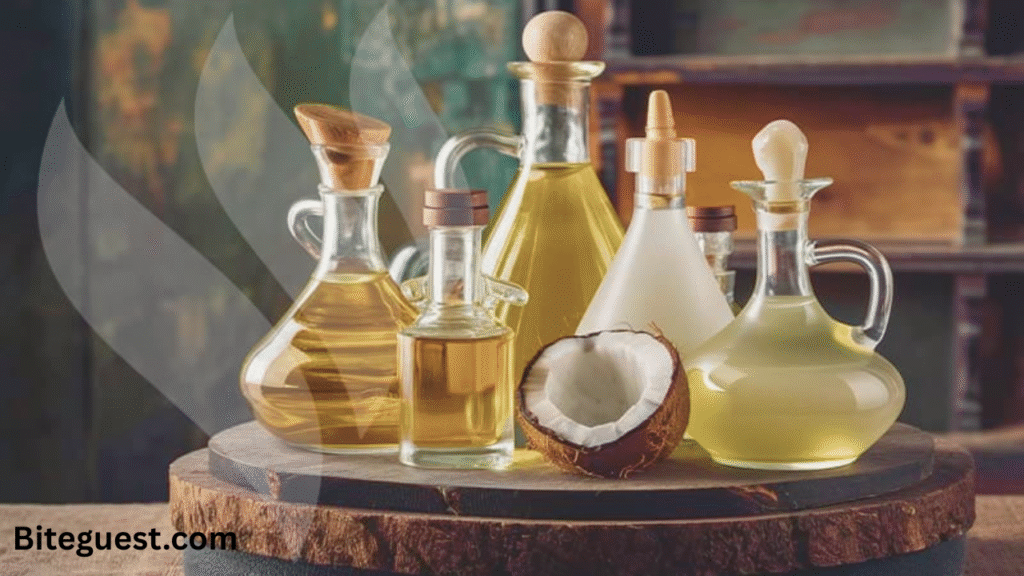
Essential oils must be diluted with carrier oils, which deliver nutrients while moisturizing the scalp.
Coconut Oil
Rich in fatty acids, coconut oil protects roots, moisturizes hair, and prevents breakage.
Castor Oil
Castor oil retains moisture and strengthens hair roots, encouraging thicker growth.
Jojoba Oil
Jojoba mimics natural scalp oils, balancing both dryness and oiliness.
Argan Oil
Argan oil is rich in antioxidants, including vitamin E, and improves hair shine, smoothness, and strength.
How to Apply Essential Hair Oils
Dilution Is Important
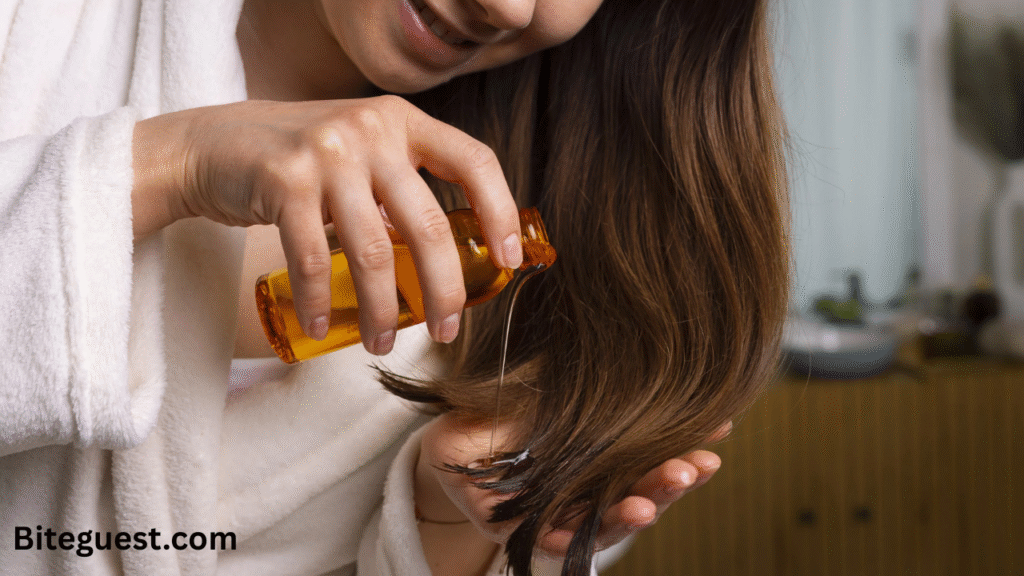
Always mix essential oils with a carrier oil. The usual ratio is:
- 2–3 drops of essential oil
- 1 tablespoon of carrier oil
Mix well before applying to the scalp.
Scalp Massage for Better Circulation
Gently massage your scalp for 3-5 minutes to increase blood circulation, which, in turn, will help with proper absorption. Massaging your scalp will help activate your roots and your oil.
Warm Oil Method
Heating the carrier oil slightly before mixing helps nutrients penetrate deeper. Applying heat to essential oil, however, should not be done.
Overnight Treatment
Diluted oil can be used at night, and then it should be washed in the morning. This provides sufficient time for proper nutrient absorption.
Benefits of Essential Oil for Long-Term Hair Growth

Supports Stronger Roots
These natural compounds found in essential oil help develop roots and promote healthy strands. With regular application, this brings about improvement.
Helps Reduce Damage
Essential oil contain antioxidants that help protect your strands from environmental stressors.
Keeps the Scalp Balanced
Whether your scalp is oily, dry, or flaky, essential oil help bring balance back to the skin.
Improves Thickness Over Time
With consistent use, essential oil support fuller and healthier strands by maintaining a strong root environment.
Safety Tips and Important Facts
Always Test First
A patch test helps ensure your skin does not react to the oil.
Do Not Use Undiluted Oils on the Skin
Essential oils are concentrated and must be mixed with a carrier oil.
Avoid Sensitive Areas
Keep oils away from the eyes, mouth, and open cuts.
Pregnancy Considerations
Some essential oils should not be used during pregnancy. Always check before applying.
Quality Matters
Choose pure, high-quality oils without artificial fragrances or additives.
Why Traditional Oil Work for Hair Growth
Traditional oils work because they supply essential nutrients like vitamins, minerals, fatty acids, and antioxidants directly to the scalp and hair follicles. They improve blood circulation, reduce inflammation, unclog blocked follicles, and repair hair damage. Unlike chemical-based products, these oils penetrate deeply and provide long-lasting results.
Using these oils consistently helps reduce hair fall, repair split ends, add shine, and improve overall hair texture. For more natural hair growth tips and remedies, visit our complete guide here.
Simple Ways to Add Essential Oils to Your Routine
Add to Your Shampoo
Mix a few drops into your daily shampoo for gentle cleansing support.
Use as a Pre-Wash Treatment
Applying before washing helps nourish roots deeply.
Blend with Aloe Vera Gel
Aloe vera offers additional soothing benefits and pairs well with most essential oils.
Combine Multiple Oil
Some blends offer more substantial benefits. Rosemary, lavender, and cedarwood are a popular combination.
Conclusion
Essential oils support stronger roots, better circulation, and a healthier scalp environment. When used consistently, they encourage natural growth and long-term strength. They also help reduce dryness, buildup, and irritation, which allows roots to work more efficiently. With many different oils available, you can choose one that fits your specific needs, whether you want to strengthen roots, boost thickness, or calm irritation. The goal is to build a simple routine that nourishes your scalp and supports overall wellness.
FAQS
1. Which essential oil is best for growth?
Rosemary oil is one of the most effective oils because it supports circulation and strengthens follicles.
2. How often should essential oils be used?
Two to three times a week is ideal for most people, depending on scalp sensitivity.
3. Can essential oils help with thinning?
Yes. Oils like peppermint, rosemary, and cedarwood support healthier roots and may help reduce thinning.
4. Do essential oils work on all scalp types?
Most oils are suitable for all types when diluted properly. Some oils work exceptionally well for specific conditions such as dryness or irritation.
5. How long does it take to see results?
Consistent use for at least 2–3 months usually shows noticeable improvement. Natural growth takes time, so patience is important.