

Email marketing remains one of the most reliable digital marketing tools, even as algorithms, platforms, and consumer behavior continue to evolve. In 2026, brands that rely solely on social media or paid ads face rising costs and shrinking reach. Email marketing, however, continues to offer direct access to audiences, measurable results, and long-term return on investment.
Modern email marketing is no longer about sending bulk messages. It is about relevance, trust, personalization, and automation. When done correctly, email marketing helps businesses build relationships, increase conversions, and create predictable revenue streams. This guide explains what email marketing is, how it works, and how to do email marketing effectively using strategies that align with today’s privacy-first and AI-driven landscape.
What is Email Marketing and How Does It Work?
Email marketing is a digital communication strategy where businesses send emails to subscribers to inform, educate, or persuade them to take action. These messages can include promotional emails, informational emails, or transactional emails, depending on the goal.
At its core, email marketing simply means using email as a permission-based channel to nurture relationships. Unlike ads, email marketing relies on consent, making it one of the most trusted and controllable marketing methods available.
How Email Marketing Works:
Understanding how email marketing works helps beginners avoid common mistakes. The process typically involves:
- Collecting email consent through opt-in forms
- Using double opt-in to ensure quality subscribers
- Organizing contacts through email list building and list segmentation
- Sending targeted email marketing campaigns
- Measuring performance using metrics like open rate, click-through rate, and conversion rate
This structure allows brands to deliver the right message at the right time while maintaining sender reputation and inbox placement.
Email Marketing for Beginners: Building a Strong Foundation
Email marketing for beginners often fails when brands rush into sending emails without a clear strategy. The foundation starts with trust and clarity.
Email List Building the Right Way:
In 2026, first-party data and zero-party data are critical. Businesses should focus on transparent data collection by clearly explaining why users are subscribing. Ethical email list building improves engagement and supports GDPR-compliant email marketing.
Key practices include:
- Clear value propositions
- Explicit email consent
- Privacy-first marketing principles
Avoid purchased lists, as they damage email deliverability and increase bounce rate.
Email Marketing Strategy That Aligns With User Intent
A strong email marketing strategy focuses on user needs rather than constant promotion. Successful brands balance different email types, such as newsletters, welcome emails, and retention emails, to support long-term engagement.
Email marketing strategies now rely on relevance, timing, and personalization rather than volume.
Personalized Email Marketing at Scale
Personalized email marketing goes beyond using a subscriber’s name. It involves behavioral data, preferences, and interaction history. AI-powered personalization allows marketers to adapt content dynamically based on user behavior.
Examples include:
- Product recommendations
- Dynamic email content
- Personalized subject lines
This approach improves email marketing conversions and overall email marketing ROI.
AI in Email Marketing and Automation Workflows
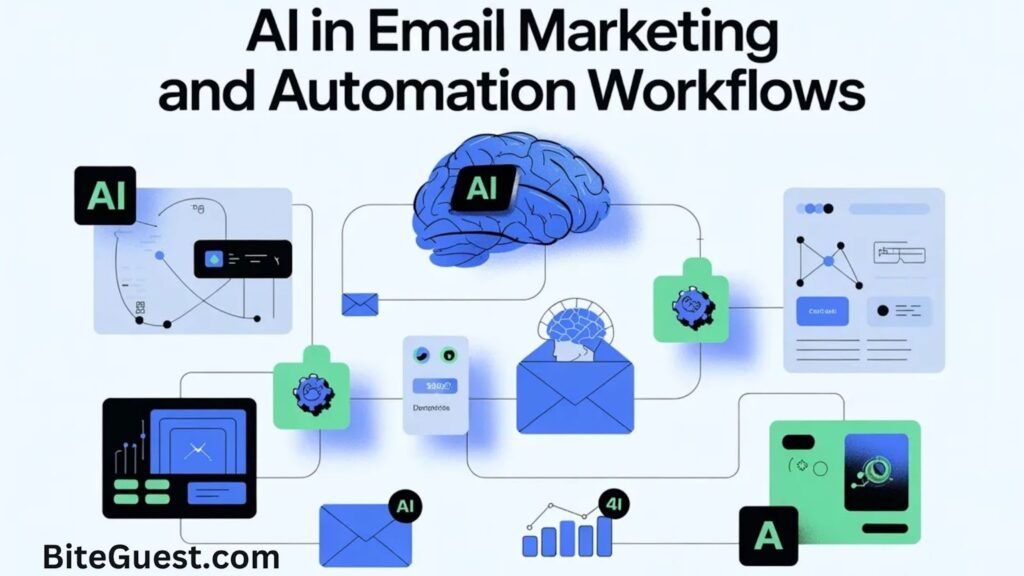
AI and Automation Tools in email marketing help brands analyze data, predict behavior, and automate decisions. Instead of guessing, marketers can rely on machine-learning-powered insights.
AI supports:
- Send time optimization
- Behaviour-triggered emails
- Content recommendations
These capabilities allow brands to scale without sacrificing relevance.
Email Marketing Automation and Workflows
Email marketing automation enables businesses to send timely messages without manual effort. Email automation workflows often include autoresponders for welcome sequences, abandoned cart emails, and re-engagement emails.
Automation reduces workload while increasing consistency, making it essential for modern email marketing success.
Types of Email Marketing Campaigns That Still Work
| Email Campaign Type | Purpose | When to Use | How It Still Works |
| Welcome Emails | Introduce the brand and set expectations | Immediately after sign-up | Builds trust early, explains value, and improves long-term engagement through personalization. |
| Promotional Emails | Drive sales or limited-time offers | During launches, sales, or discounts | Works best when personalized and sent based on user behavior, not mass blasts |
| Informational Emails | Educate subscribers and provide value | Ongoing communication | Strengthens authority and keeps the audience engaged without being sales-focused |
| Newsletters | Share updates, content, or insights | Weekly or monthly | Consistent storytelling and curated content improve open and click-through rates. |
| Transactional Emails | Confirm actions like orders or passwords | Triggered by user actions | High open rates make them ideal for reinforcing brand trust and clarity |
| Abandoned Cart Emails | Recover incomplete purchases | When a user leaves items in the cart | Behavior-triggered timing and dynamic content increase conversion rates |
| Retention Emails | Encourage repeat engagement or purchases | After a customer becomes inactive | Personalized incentives and reminders boost customer lifetime value |
| Re-engagement Emails | Win back inactive subscribers | After long inactivity | AI-based segmentation helps send relevant offers instead of generic messages. |
| Behaviour-Triggered Emails | Respond to specific user actions | Based on clicks, views, or inactivity | Highly relevant timing increases inbox placement and engagement |
| Email Automation Sequences | Nurture leads automatically | Throughout the customer journey | Automated workflows ensure consistent communication without manual effort |
Privacy, Trust, and Compliance in Email Marketing
Privacy-First Email Marketing:
Privacy expectations are higher than ever. GDPR-compliant email marketing is not optional; it is essential for trust and long-term success.
Key trust-building elements include:
- Clear unsubscribe options
- Transparent data usage
- Secure email delivery service providers
Privacy-first marketing strengthens brand credibility and reduces complaints.
Email Deliverability and Inbox Placement:
Email deliverability determines whether emails reach inboxes or spam folders—factors such as sender reputation, email list hygiene, and consistent sending behavior directly affect inbox placement.
Maintaining a clean list reduces bounce rate and protects long-term performance.
Measuring Email Marketing Performance:
Tracking the right metrics ensures continuous improvement. Essential metrics include:
- Open rate
- Click-through rate
- Conversion rate
- Email marketing ROI
These indicators help refine email marketing best practices and identify what resonates with audiences.
Email Marketing Tools, Platforms, and Infrastructure
| Category | Tool / Platform Type | Primary Role | Why It Matters in Modern Email Marketing |
| Email Marketing Platform | All-in-one email marketing software | Create, send, and manage campaigns | Central hub for newsletters, automation, analytics, and list management |
| Email Service Provider (ESP) | Sending and delivery provider | Ensures emails reach inboxes | Strong ESPs improve email deliverability and sender reputation |
| Email Automation Software | Workflow-based automation tools | Trigger emails based on behavior | Enables behaviour-triggered emails and scalable automation workflows |
| Transactional Email Service | API-based email delivery service | Sends order, login, and system emails | Critical for reliability, speed, and inbox placement |
| SMTP Email Service | SMTP relay infrastructure | Handles high-volume email sending | Supports scalable email infrastructure and consistent delivery |
| High Deliverability Email Provider | Reputation-focused sending platforms | Protects inbox placement | Actively manages bounce rate, spam filtering, and IP reputation |
| Email Design Tools | Drag-and-drop or HTML editors | Create responsive email layouts | Ensures accessibility, readability, and mobile optimization |
| List Management & Segmentation Tools | Data organization systems | Segment subscribers effectively | Improves personalization and email marketing conversions |
| AI-Powered Personalization Tools | Machine-learning-based systems | Customize content dynamically | Drives personalized email marketing without manual effort |
| Send Time Optimization Tools | AI timing optimization software | Choose the best send times | Increases open rate and click-through rate automatically |
| Email Analytics & Reporting Tools | Performance measurement tools | Track engagement metrics | Helps optimize email marketing ROI and campaign effectiveness |
| Deliverability Monitoring Tools | Inbox and spam testing tools | Monitor inbox placement | Identifies issues before campaigns fail |
| Email List Hygiene Tools | List cleaning and validation services | Remove invalid contacts | Reduces bounce rate and protects sender reputation |
| Compliance & Privacy Tools | GDPR and consent management tools | Ensure legal compliance | Supports GDPR-compliant email marketing and trust building |
The Future of Email Marketing: What to Expect Beyond 2026
The future of email marketing points toward smarter automation, deeper personalization, and stronger trust signals. Email marketing trends highlight the growing importance of AI, consent-driven data, and value-based communication.
Brands that focus on relationships rather than volume will continue to outperform competitors. Email marketing in 2026 is not about doing more—it is about doing better.