


Your immune system works quietly every day to protect your body from infections, viruses, and diseases. When it is strong, you may not even notice it. But when it becomes weak, your body starts giving warning signs. Many people ignore these signs or think they are “normal,” but they are often signals that your immune system needs support.
This article explains 10 clear symptoms of a weak system and natural ways to improve it. The language is simple, the examples are real, and the information is accurate and beginner-friendly. The goal is to help you understand your body better and take small, healthy steps toward stronger immunity.
What Is the Immune System and Why Is It Important?
The immune system is your body’s defense system. It is made of white blood cells, antibodies, lymph nodes, and specialized organs such as the spleen and bone marrow. Together, they fight germs and help your body heal.
When your immune system is healthy:
- You recover quickly from illness
- You get sick less often
- Small cuts heal on time
- Your energy stays more stable
When it is weak, even common infections can affect you more strongly and last longer.
Understanding how lifestyle affects immunity is important for overall Health
What Causes a Weak Immune System?
A weak immune system does not happen overnight. It usually develops slowly because of daily habits and long-term stress on the body. Common causes include poor diet, lack of sleep, ongoing stress, not moving enough, smoking, excessive alcohol use, and some medical conditions. Aging can also weaken the immune , which is why older adults need extra care.
Overtraining without proper rest can also weaken immunity — see our guide on 10 Signs You’re Overtraining – and How to Recover Safely.
10 Symptoms of a Weak Immune System
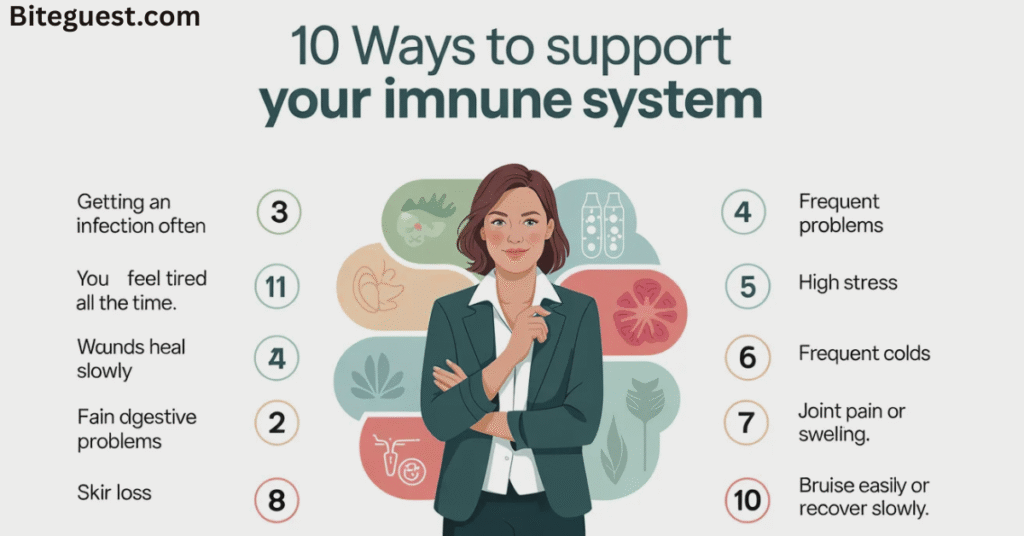
Below are the most common and medically recognized signs that your immune system may be struggling.
1. Getting an infection often
If you find yourself catching colds, flu, or infections again and again, it can be a clear sign that your immune system is weak. A healthy system usually fights off common viruses before they make you seriously ill. When immunity is low, germs enter the body more easily and take longer to clear.
In real life, this may look like getting sick every few weeks or taking longer to recover than others. You may also notice that simple illnesses feel stronger or last longer than usual. This often happens when the body lacks key nutrients, sleep, or is under constant stress.
2. You Feel Tired All the Time
Feeling tired all the time, even after proper rest, is another common sign of a weak system. Your body may be using extra energy to fight inflammation or hidden infections, leaving you with little energy for daily activities.
This type of fatigue feels deep and ongoing. You may wake up tired, feel low on energy during the day, and struggle to stay focused. When the immune system is not functioning well, the body cannot balance energy properly, leading to constant exhaustion.
3. Wounds Heal Slowly
If small cuts, scrapes, or burns take longer than usual to heal, it may indicate a weak immune system. Healing needs immune cells to fight bacteria and repair damaged tissue. When immunity is low, this process slows down.
In daily life, you may notice that even minor injuries stay red, sore, or open for many days. This can also occur when the body lacks nutrients such as zinc or vitamin C, which are important for tissue repair.
4. Frequent Digestive Problems
Ongoing digestive issues such as bloating, gas, diarrhea, or constipation can be linked to a weakened immune system. A large part of the immune system lives in the gut, so poor gut health directly affects immune strength.
If digestion is often upset, the body may struggle to properly absorb nutrients. This makes it harder for the immune system to stay strong and protect you from infections.
5. Skin Problems That Don’t Go Away
Skin rashes, dryness, irritation, or frequent breakouts that do not improve can be a sign of an immune imbalance. The skin acts as a protective barrier, and when immunity is weak, it becomes more sensitive to bacteria and inflammation.
You may notice that skin issues return often or heal very slowly, even with basic care.
6. High Stress Levels for Long Periods
Long-term stress weakens the immune system by increasing stress hormones, such as cortisol. These hormones reduce immune cell activity, making the body more vulnerable to illness.
People who feel stressed for weeks or months often notice they get sick more easily or take longer to recover.
7. Frequent Colds or Respiratory Issues
If you often suffer from colds, sore throats, coughs, or sinus infections, your immune system may not be strong enough to fight respiratory viruses.
A weak immune response allows these infections to persist longer or recur more frequently, especially during seasonal changes.
8. Hair Loss or Sudden Thinning
Sudden or unusual hair loss can sometimes be linked to immune problems. In certain cases, the immune system mistakenly attacks hair follicles, leading to thinning or patchy hair loss.
While hair loss has many causes, an immune imbalance is one factor that should not be ignored if the problem appears suddenly.
9. Joint Pain or Swelling
Ongoing joint pain, stiffness, or swelling may indicate that the immune system is attacking healthy joint tissue. This can happen in autoimmune conditions where the immune system becomes overactive.
Long-lasting joint discomfort should be evaluated by a healthcare professional.
10. You Bruise Easily or Recover Slowly
If bruises appear easily or take a long time to fade, it may mean your body is slow to repair damaged blood vessels and tissues. This can be linked to weak immunity or low nutrient levels.
Slow recovery from minor injuries is often a sign that the immune system needs better support through diet, rest, and lifestyle changes.
How to Improve Your Immune System Naturally

Strengthening your immune system does not require extreme measures. Simple, consistent habits often make the biggest difference over time.
Eat a Balanced, Nutrient-Rich Diet
Food provides the building blocks your immune system needs. A healthy diet supports immune cells, reduces inflammation, and improves gut health.
Key nutrients your immune system depends on include:
- Vitamin C for immune cell support
- Vitamin D for immune regulation
- Zinc for wound healing and defense
- Antioxidants to reduce inflammation
Fruits, vegetables, whole grains, nuts, seeds, legumes, and lean proteins naturally help meet these needs.
Prioritize Quality Sleep
Sleep is when your body repairs itself. During sleep, your immune system releases protective proteins that fight infection. Adults usually need 7 to 9 hours of sleep each night.
Poor sleep over long periods can weaken immune responses and increase the risk of illness.
Manage Stress in Daily Life
Reducing stress helps your immune system work properly. Calm activities lower cortisol and allow immune cells to function better.
Helpful stress-reduction habits include:
- Deep breathing or prayer
- Light stretching or yoga
- Spending time outdoors
- Limiting screen time before bed
Even 10–15 minutes a day can help.
Stay Physically Active
Regular, moderate exercise improves circulation and helps immune cells move through the body more effectively. Walking, cycling, swimming, or gentle workouts are enough.
Very intense exercise without rest can temporarily weaken the immune system, so balance is important.
Support Gut Health
A healthy gut supports strong immunity. Drinking enough water, eating fiber-rich foods, and including fermented foods like yogurt or pickled vegetables can help maintain a healthy gut microbiome.
Avoid Habits That Weaken Immunity
Smoking, heavy alcohol use, and high-sugar diets increase inflammation and reduce immune efficiency. Reducing or avoiding these habits can strengthen the immune system over time.
Daily Habits That Support Immune Health
Small daily actions create long-term results. Focus on consistency, not perfection.
- Eat colorful, whole foods
- Drink water regularly
- Sleep at the same time each night
- Move your body most days
- Take breaks to relax your mind
These habits gently support your immune system every day.
When Should You See a Doctor?
While lifestyle changes help most people, some symptoms need medical attention. You should consult a healthcare professional if you experience:
- Frequent severe infections
- Extreme fatigue that affects daily life
- Unexplained weight loss
- Ongoing joint pain or swelling
Early evaluation helps identify underlying conditions and prevents complications.
Final Thoughts
The immune system is complex, involving many body systems working together. While symptoms like fatigue, frequent sickness, and slow healing can be signs of a weak immune system, many natural lifestyle changes — balanced meals, good sleep, stress management, and regular movement — can make a real difference.
Focus on consistent, small improvements rather than quick fixes. Over time, these habits strengthen your body’s natural defense and support lasting health.
FAQS
How do I boost my weakened immune system?
You can boost a weak immune system by eating healthy foods, sleeping well, managing stress, staying active, and drinking enough water consistently.
What are 5 signs of a weak immune system?
Common signs include frequent illness, constant fatigue, slow wound healing, digestive problems, and recurring skin issues.
Is it true that 70% of your immune system is in your gut?
Yes, a large part of the immune system is linked to the gut, where healthy bacteria help control immune responses and protect against germs.
How can I check my immunity levels?
Immunity levels can be checked through medical tests, such as blood tests, which a doctor may recommend based on your symptoms and health history.
Can stress really weaken the immune system?
Yes, long-term stress increases cortisol levels, which can reduce immune function and make you more likely to get sick.