

Your body needs specific nutrients to stay healthy, energetic, and sharp. One of the most important is Vitamin B12. It protects nerves, helps produce energy, and forms red blood cells. Many people think B12 comes only from meat and dairy. However, plant-based, vegan, and fermented foods can also help. Fruits and vegetables, fortified cereals, and plant milk provide natural sources. In this article, you will learn about foods rich in B12, how to get B12 on a vegan diet, factors that affect absorption, and ways to increase intake.
What is Vitamin B12?
Vitamin B12, also known as cobalamin, is a water-soluble vitamin that plays a significant role in DNA synthesis, nerve repair, red blood cell production, and metabolism. However, because it is one of the largest vitamins, absorption can be slow and sometimes hindered. As a result, many people experience B12 deficiency symptoms, even when eating a varied diet.
Additionally, Vitamin B12 supports immunity, brain function, mood stability, memory, and proper nerve communication. Without it, the body cannot deliver oxygen efficiently, the brain becomes foggy, and fatigue becomes a daily problem.
Why Vitamin B12 Is Important
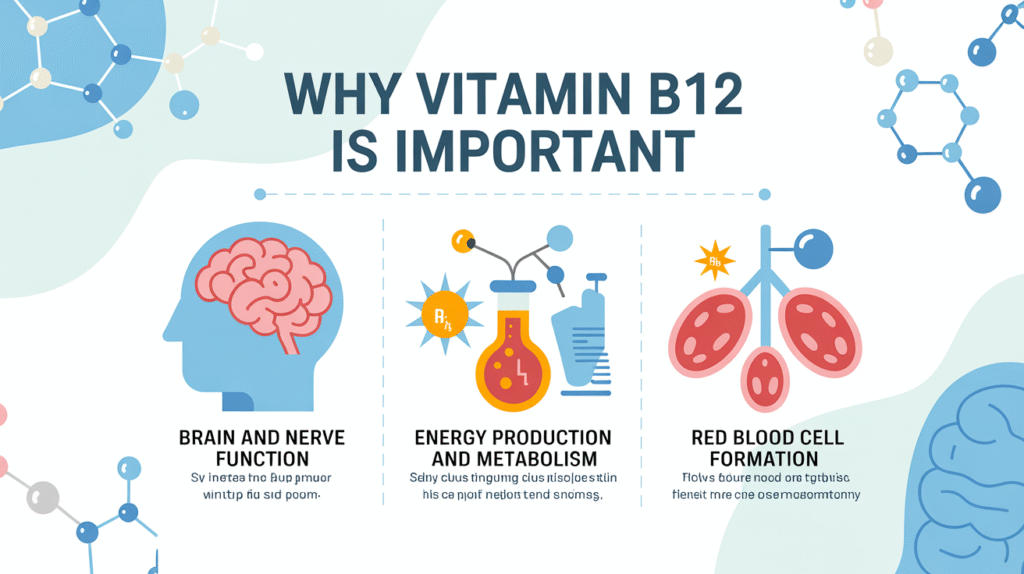
Vitamin B12 offers numerous benefits, including enhanced memory, focus, and mental clarity. Therefore, it is crucial for overall health, energy production, nerve health, and red blood cell formation. Without sufficient B12, your body may encounter serious health problems.
1. Brain and Nerve Function
B12 for nerve health supports nerve cells and helps produce myelin, a protective layer around nerves. Consequently, low B12 may cause nerve damage, tingling, numbness, or balance problems. Moreover, understanding how to get B12 on a vegan diet is essential for those avoiding animal products.
Energy Production and Metabolism
Vitamin B12 converts food into energy. Without enough, you may feel constantly tired. Furthermore, adequate B12 supports metabolism and helps maintain stable energy levels. In addition, energy-boosting plant foods and plant-based protein sources complement natural B12 intake.
Red Blood Cell Formation
B12 is vital for producing red blood cells. Otherwise, your body may create abnormally large cells, leading to anemia, weakness, and shortness of breath. Similarly, foods rich in iron and folate support B12 absorption, enhancing red blood cell production.
Vitamin B12 Foods You Should Add to Your Diet
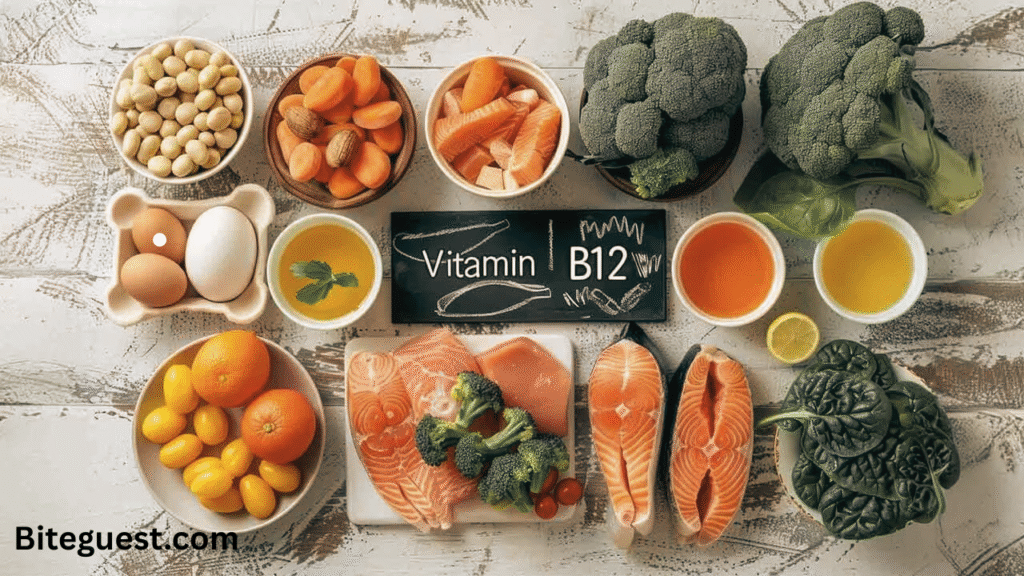
Maintaining sufficient Vitamin B12 requires incorporating both animal and fortified plant-based foods into your diet. For example, these sources can help prevent symptoms of B12 deficiency.
Best Animal-Based Sources of Vitamin B12
Animal products are the richest sources of B12. They include meat, fish, eggs, and dairy. Therefore, they provide enough B12 to easily meet daily requirements.
Dairy Sources of Vitamin B12
Milk, yogurt, and cheese are excellent sources. For instance, Swiss cheese provides a significant amount of B12 per serving and can enhance sandwiches, omelets, or salads. Additionally, milk and yogurt are great for strengthening bones and overall health in children and adults.
Seafood Sources of Vitamin B12
Seafood such as clams, tuna, and salmon is high in B12. In fact, clams provide B12, omega-3 fatty acids, and minerals. Hence, including seafood in meals helps boost natural B12 intake.
Importance of Fruits and Vegetables:
Fruits and vegetables are significant foods in good nutrition, general well-being, and energy balance. They supply antioxidants, fibre, minerals, and vitamins that support digestion, metabolism, and immune function. Though fruits and vegetables are not significant sources of vitamin B12, some of them contain trace amounts or help your body absorb B12 more efficiently because they support gut health.
A diet rich in leafy vegetables, colourful fruits, and plant-based foods supports your metabolic system and helps your body absorb nutrients.
Foods Containing Vitamin B12:
Knowing which foods can provide vitamins will help supplement your diet appropriately and avoid health problems. Fortunately, adding meat and dairy products to your meals will help supplement your diet with an adequate amount of vitamin B12. In the case of vegans and vegetarians, here is a list of vegetables and fruits rich in vitamin B that you may want to add to your grocery list:
Fruits That Contain Vitamin B12 (Trace Amounts)
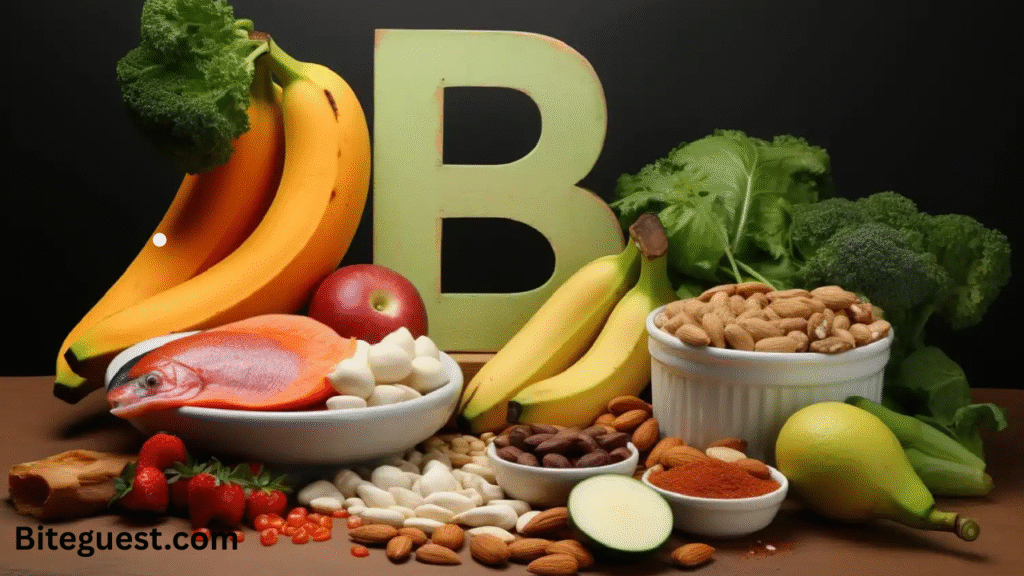
Of course, fruits are not particularly good sources of vitamin B12 compared to other food items; there is a fair number of fruits that contain traces of this vital vitamin. Adding these fruits to your diet can help supplement your intake, but they may not be key sources. Here are some fruits that contain small amounts of vitamin B12:
Bananas
A banana is a fruit widely consumed for its high potassium content and its easy portability. Although bananas are not rich in vitamin B12, they do contain small amounts; hence, they are also very healthy to add to your diet.
Oranges:
Oranges are renowned for their high vitamin C content, and they do contain trace amounts of vitamin B12. Snacking on a juicy orange or adding orange slices to salads can provide a slight boost of vitamin B along with other vital nutrients.
Apples:
An apple a day may keep the doctor away, but it also offers up a decent amount of vitamin B12. Apples are not a good source of the vitamin per se; they do, however, offer fibre, antioxidants, and other essential nutrients important to health.
Vegetables Rich in Vitamin B12 (Trace Amounts)
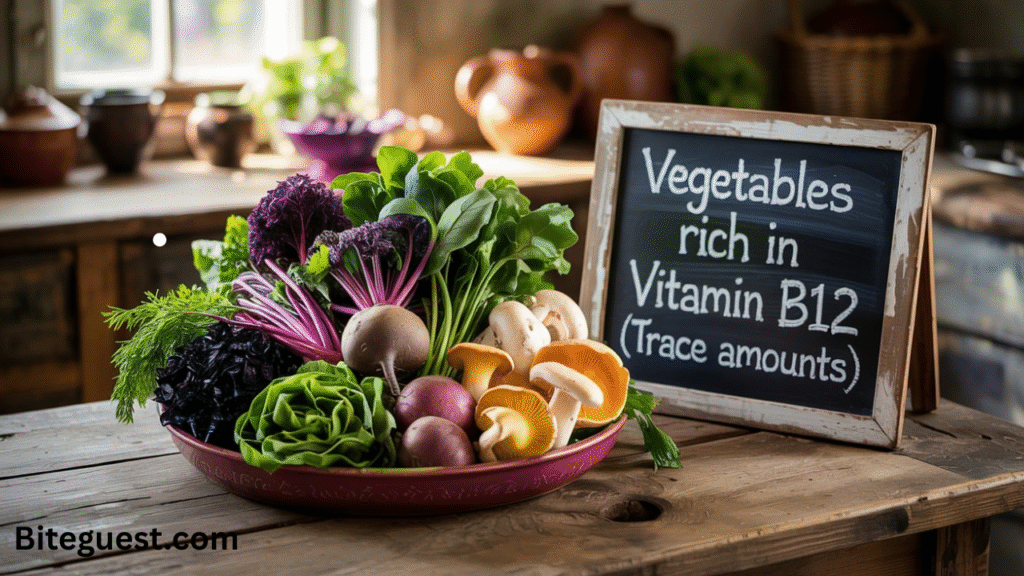
Among vegetables, B12 is low, though some contain small amounts; these can serve as valuable additions, especially within a plant-based diet.
Spinach
Spinach contains a small amount of B12, as well as iron, antioxidants, and other vitamins. It can be added to smoothies, salads, or cooked dishes.
Beetroot
Beetroot is good for red blood cells and contains trace amounts of B12. It’s also high in fibre, potassium, and vitamins, making it a healthy addition to salads and sides.
Potatoes
Potatoes are among the few vegetables that contain modest levels of B12. They are highly available, versatile, and offer other nutrients such as potassium and vitamins.
Kale
Kale is nutrient-dense and contains small amounts of B12. It is an excellent source of vitamins A, C, and K, which are suitable for overall health.
Mushrooms
Mushrooms, such as shiitake and portobello, contain a trace amount of B12. They are enjoyable in stir-fries, soups, or salads.
Do you have these signs of a B12 deficiency?
Indeed, a deficiency of Vitamin B12 may manifest in various signs and symptoms that involve different systems of the human body. The following are some common manifestations of vitamin deficiency.
Fatigue and Weakness:
Common symptoms of vitamin B12 deficiency include fatigue and weakness, even after adequate rest. Sometimes this tiredness persists despite insufficient sleep and rest.
Yellowish skin:
Vitamin B12 deficiency may lead to megaloblastic anaemia, a condition characterised by reduced red blood cell production. The skin may acquire a pale or slightly yellowish hue.
Factors That Affect Vitamin B12 Absorption
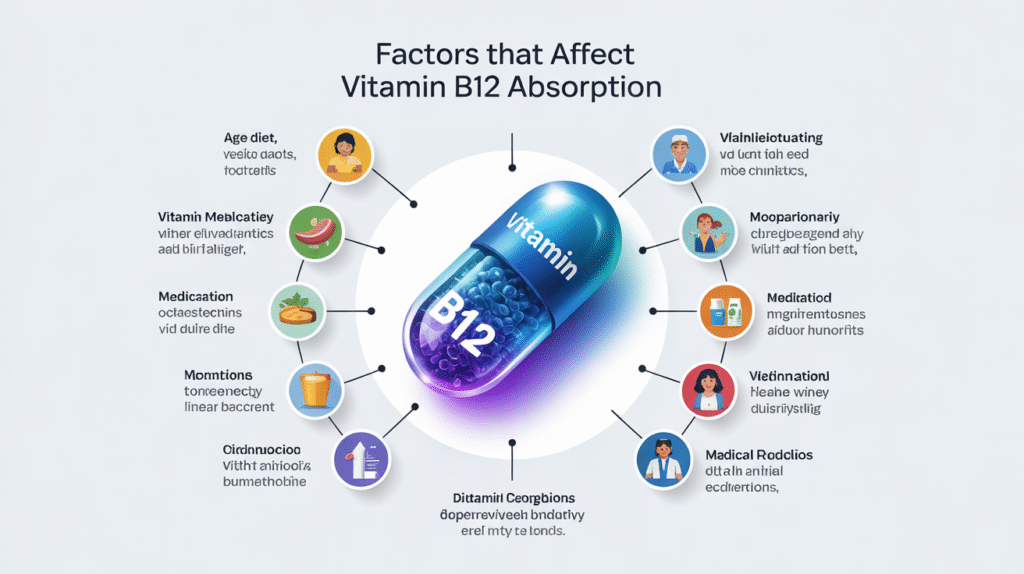
Even if you eat B12-rich foods, absorption can be affected by several factors.
Digestive Health
B12 must be ingested with healthy stomach acid, along with an attached protein intrinsic factor. Digestive issues can cut down absorption efficiency.
Age and Lifestyle
Older adults may absorb less B12. Smoking, alcohol, or certain diseases can impair absorption.
Medication Interference
Some medications, including proton pump inhibitors or metformin, inhibit the absorption of B12. If you are taking any of these drugs, regular monitoring may be required.
Recommended Daily Intake of Vitamin B12
Knowing your daily requirement helps prevent deficiency.
How Much B12 You Need Daily
Adults should consume 2.4 micrograms of vitamin B12 per day. The demand is higher during pregnancy or lactation.
Daily Needs for Adults and Seniors
Seniors may require more B12 due to reduced absorption. Regular blood tests and diet monitoring will help keep levels within a healthy range.
Recommended Daily Intake
The daily recommended dosage of vitamin B12 includes different factors such as age and gender. The general adult daily dosage is 2.4 micrograms of vitamin B12. Individual requirements may vary, hence it is better to consult a healthcare professional for more details about your body’s needs.
Incorporating Vitamin B12-Rich Foods Into Your Diet
Incorporation of foods rich in vitamin B12, fruits, and vegetables into your daily meals isn’t complicated. You can change what you already eat or add to it. For example, add leafy greens like spinach and kale to your salads and smoothies, or mushrooms to stir-fries and soups. Experiment with vitamin B12-fortified foods, such as cereals and plant-based milk alternatives, for convenience.
Easy Ways to Add Vitamin B12 Foods to Your Meals

Adding B12 to your diet can be simple and tasty.
Breakfast Ideas
Enjoy the day with fortified cereal and plant milk, or scrambled eggs with spinach and mushrooms for an added boost of B12.
Lunch and Dinner Ideas
Main meals include grilled chicken, tuna, or clams. Vegetarian options for lunch and dinner include kale salads with mushrooms and nutritional yeast.
Simple Everyday Swaps
Swap regular milk for fortified plant milk or add nutritional yeast to pasta instead of cheese. Small changes help in meeting the daily requirement of B12.
Conclusion
In summary, vitamin B12-rich foods, such as fruits and vegetables, should be a priority in one’s diet for health and well-being. Be it meat, vegetarian, or vegan, there are enough food options to provide the daily needs of vitamin B12 in your body. This is how one can support their body’s vital functions by eating a variety of foods and adding nutritious items to their meals for a healthy, active life.
For older adults, also check Best Vitamins & Supplements for 50-Year-Olds In 2026 Expert Guide.
FAQs
Can I get enough Vitamin B12 from fruits and vegetables?
Fruits and vegetables contain only traces of B12. Vegans and vegetarians need to look to fortified foods or supplements to supply their daily needs.
How do I know if I’m Vitamin B12 deficient?
Common symptoms include fatigue, weakness, memory loss, mood alteration, tingling in the hands and feet, and pale skin. Blood tests can confirm a deficiency.
Can Vitamin B12 deficiency be reversed?
Most can reverse deficiency through a proper diet, fortified foods, or supplements, whereas early intervention against long-term nerve damage requires attention to this nutrient.
Is it possible to take too much Vitamin B12?
B12 is water-soluble, so the excess is generally excreted in urine. Overdosing from food and supplements is uncommon, but follow the recommended guidelines.
What is the best way for vegans to get Vitamin B12?
Accordingly, vegans should ensure they get enough B12 from fortified cereals, plant milks, nutritional yeast, and supplementation.