

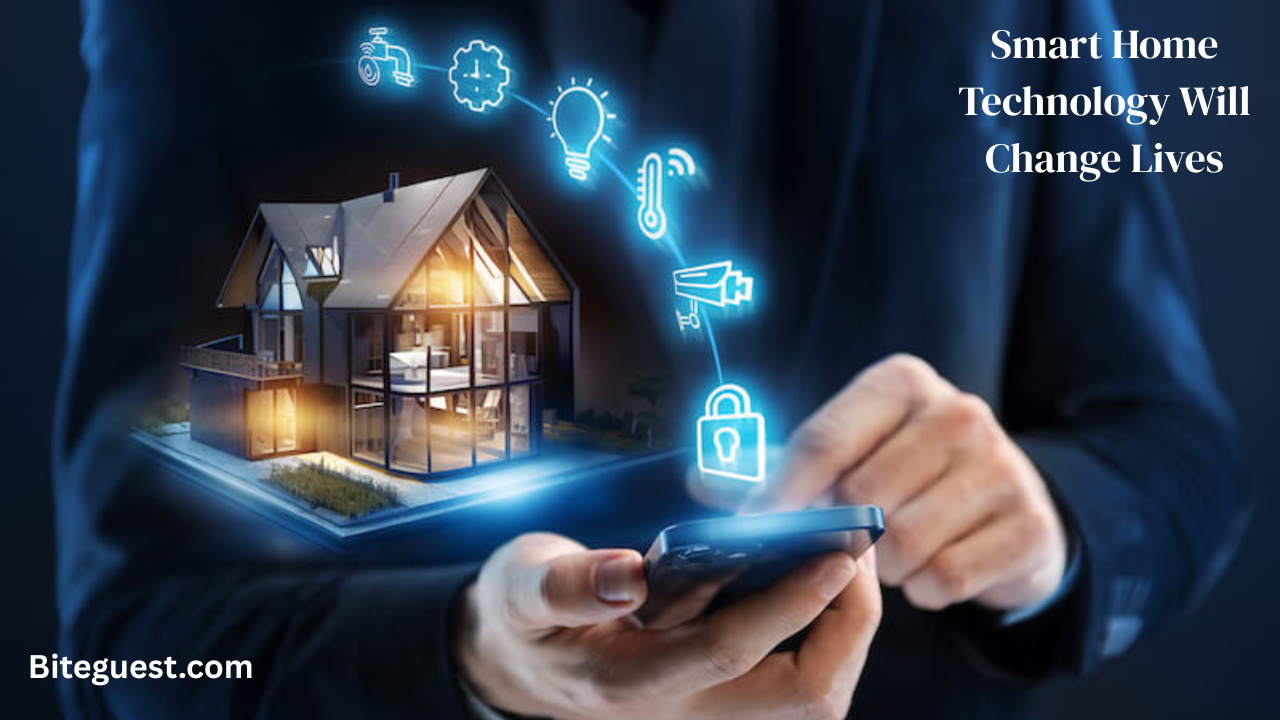
Smart home technology is changing the way we live today, and some experts think it will completely transform homes by 2026. Smart homes use sophisticated sensors, AI, automation, and connected appliances to provide a comfortable, secure living space that promotes sustainability.
Smart home systems are intended for ease of use, from smart lights and thermostats to connected appliances, full home security systems, and AI assistants, as well as their ability to integrate with advanced home automation platforms. Whether contextual or routine, advancements in smart technology are enabling the home to learn users’ routines, allowing bedrooms and spaces to respond to habits, and ultimately providing a personalized experience.
This article examines how smart home technology will change lives by 2026, including the implications for home management, climate control, human health, entertainment, and the future of smart homes. This article examines how smart home technology will change lives by 2026, including automation, sustainability, security, healthcare, entertainment, AI, and the future of smart homes.
The Rise of Smart Home Technology in Everyday Life
At first, smart homes were just the best that wealthy families could buy. Nevertheless, nowadays, smart home appliances are poised to enter the budget category. Google, Amazon, Apple, and Samsung are the tech companies that not only made devices but also ensured that they work together through their ecosystem.
The wired homes are no longer the deal where each appliance has its way. Instead, the company is collaborating to deliver the best possible customer experience. The following are practical examples:
- Bright thermostats that modify your home’s temperature based on your presence
- Smart locks that activate as your phone nears them
- Bright lights that adjust their intensity according to daylight
The smart home industry is experiencing remarkable growth. Statista predicts that by 2026, it will be worth $138 billion. The trends of 2026 suggest that installing smart home systems will soon become common in most households worldwide.
Top Smart Home Technologies That Will Change Lives
1. Smart lights that adjust automatically.

Smart lights are already doing this automatically according to their daily schedules. They light up the place in the morning and switch off at night, while smart sensors control the light based on movement. Besides, many smart home devices can change the lighting colors based on daytime activities or mood. Speech commands via home assistants such as Alexa, Siri, or Google Assistant allow homeowners to turn on bright lights without touching them.
Gradually, these bulbs are learning the user’s preferences using artificial intelligence, so they can use less electricity and provide greater comfort. The inclusion of smart lights in home networks reduces power consumption and creates distinct personal areas in the house.
2. Smart thermostats that save energy.
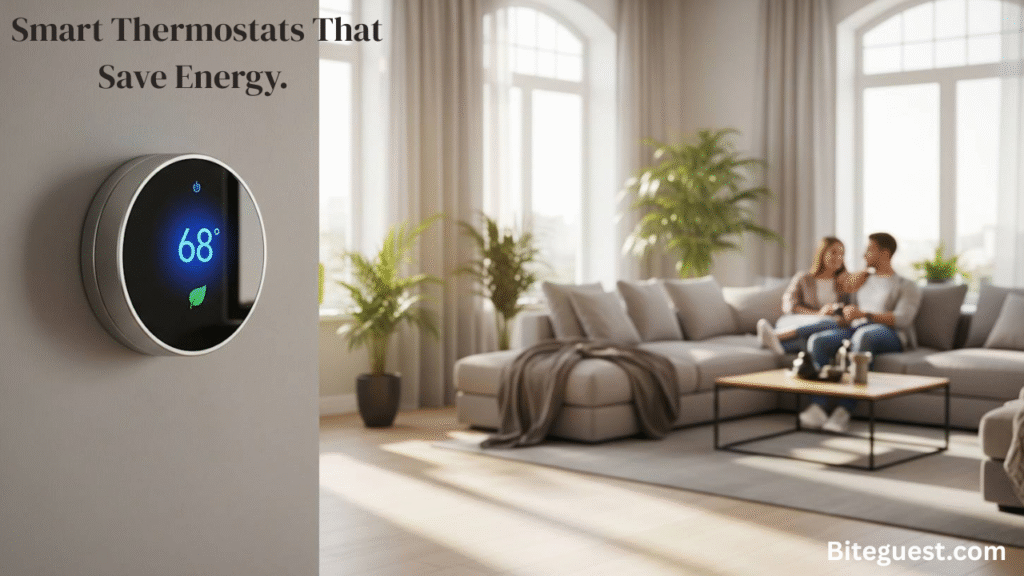
The features of smart thermostats are brilliant for home temperature control. They learn the daily family routines and thus automatically adjust the heating and cooling. This, in turn, helps to eliminate energy waste and cut electricity bills. A number of these devices also offer energy usage reports and suggestions for better energy management.
Some even combine HVAC systems with real-time weather data for the utmost efficiency. Nest users, for instance, brag about saving $150 a year. The use of smart thermostats, along with other connected devices, will definitely make homes more energy-efficient, environmentally friendly, and comfortable.
3. Smart locks that unlock with your phone.

Smart locks provide keyless entry and advanced home security. They detect phones or fingerprints for automatic unlocking and allow temporary access for guests or service providers. Alerts notify homeowners of tampering or unusual activity.
By integrating smart locks into home ecosystems, families gain real-time monitoring and enhanced safety. These devices combine convenience, security, and interoperability with other smart home systems.
4. Smart doorbells with video.
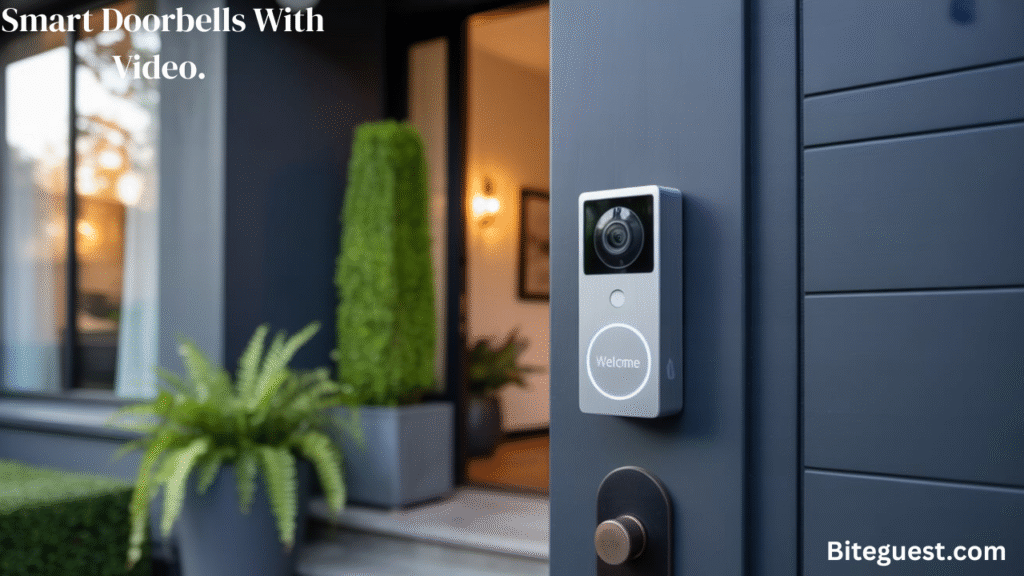
Smart doorbells are equipped with video cameras and two-way communication, allowing owners not only to see but also to talk to guests at their door from a distance. The house is monitored, and motion detection sends notifications whenever someone approaches the door. Some smart doorbell devices even feature AI that can distinguish between pets and humans, thus minimizing the risk of receiving an incorrect notification.
Smart doorbells form the backbone of intelligent security systems. According to studies, these devices have reduced package theft by more than 40%, suggesting the clear safety benefits of smart home technologies in residential areas.
5. Smart cameras for security.
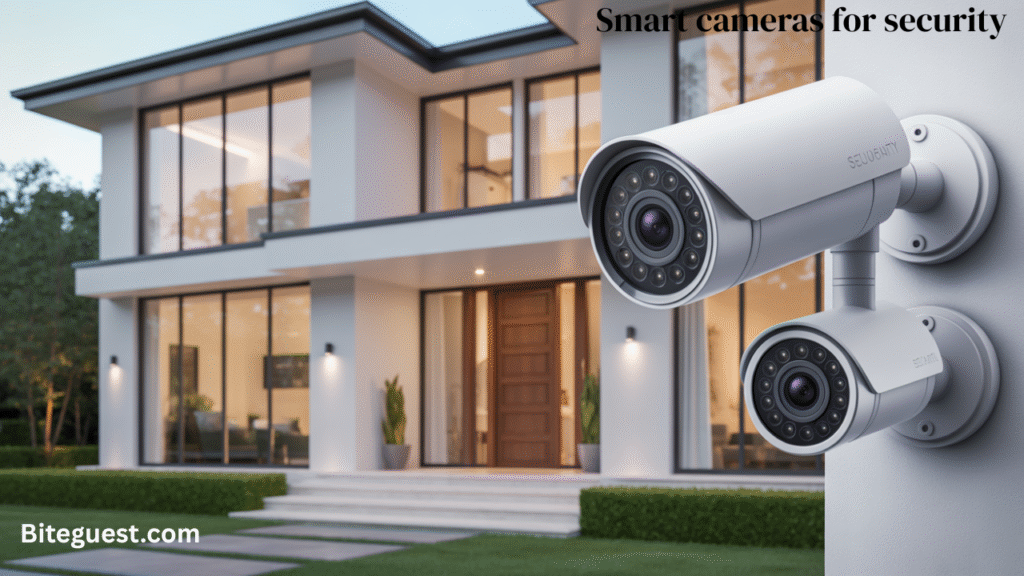
Smart cameras are always watching our homes and detecting movements, sounds, and unusual activity. Thanks to AI, these cameras can identify people, pets, and objects. Among other things, homeowners can use mobile apps to access live camera feeds from any location.
By adding smart cameras to their security arsenal, families not only increase their security but also eliminate the tediousness of monitoring. The opposite of surveillance, smart cameras are at the forefront of building a fully interconnected home ecosystem that can alert instantly and provide the emotional support needed.
6. Smart Appliances That Reduce Energy Use
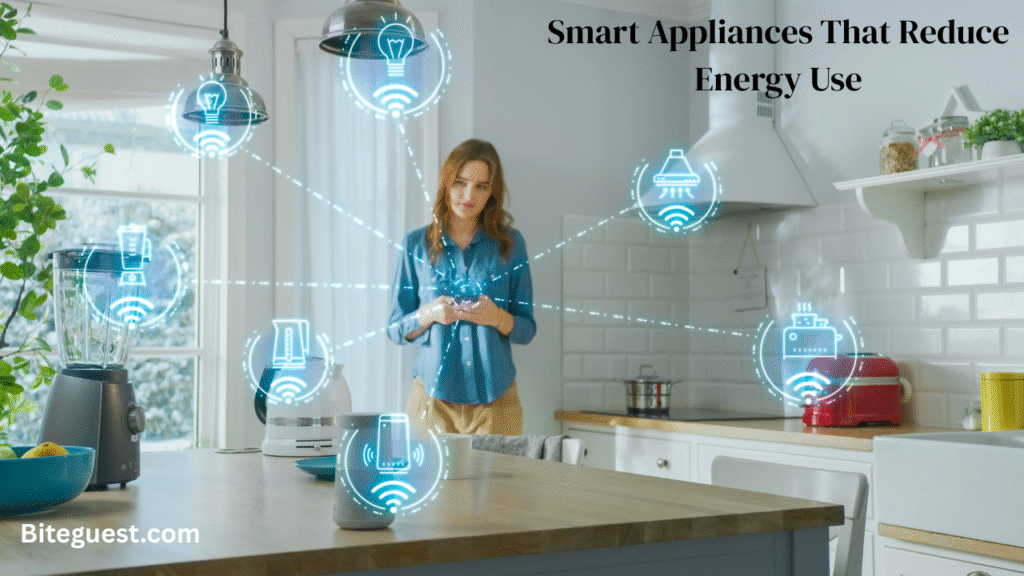
Washing machines, refrigerators, and ovens are some of the smart appliances that perfectly regulate their energy use without compromising performance. The washing machine is the one that knows best when to stop, the fridge is like a health-conscious baby that always monitors its temperature and knows the exact moment when it needs maintenance, while the oven is the one that can be heated up from a distance.
Smart appliances are part of the home on an IoT scale, automating not only energy consumption and daily chores but also the overall home experience. With AI and machine learning, smart appliances are becoming more user-friendly by learning the routines to enhance their accuracy.
7. AI Voice Assistants Like Alexa and Siri

AI assistants are responsible for managing all smart home devices without human intervention. They run the whole house via voice control, operating lights, locks, thermostats, and smart appliances. They also assist you with household schedules, reminders, and daily routines.
Over time, home assistants become familiar with users’ patterns and thus can suggest routines and even automate tasks across several connected devices. AI-driven home ecosystems unite these assistants to deliver a seamless home experience by linking smart home technology with users’ daily lives.
8. Smart Beds for Better Sleep
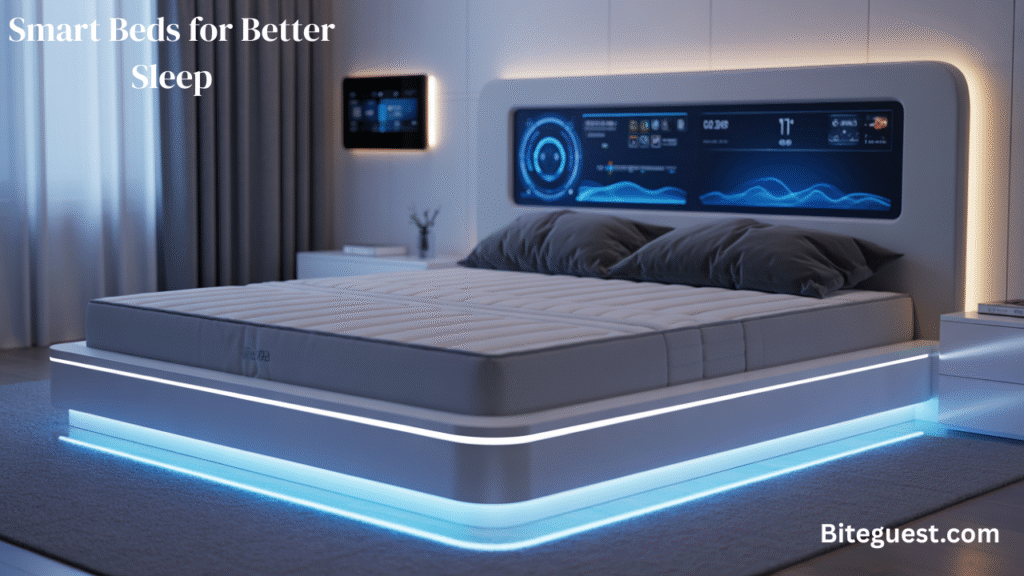
Smart beds keep track of the sleeper’s patterns, movements, temperature, and heart rate. The beds will adjust themselves accordingly to provide the user with the best possible sleep environment. The connected applications provide users with in-depth sleep analysis, which, in turn, leads to better health and wellness.
These smart sensors and wearable devices become part of the home and support the user in getting a good rest. Smart beds are a good example of how AI and IoT coexist to promote wellness, comfort, and energy-efficient smart homes.
9. Smart Air Purifiers
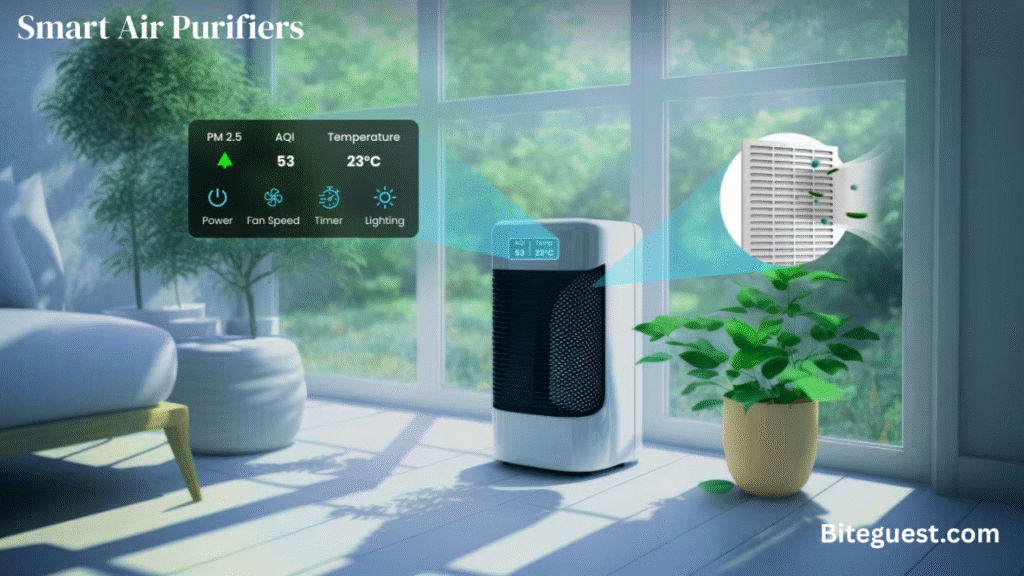
Smart air purifiers are the kind of gadgets that take care of your home’s air quality on their own. They are equipped with sensors that monitor the air for dust, pollen, or smoke. Once the air becomes contaminated, they increase their filtration rate to remove the pollutants.
You can control these purifiers via your smartphone or voice assistant since they are connected to your smart home system. Some models even become aware of your daily routine and adjust their settings to reduce energy consumption. They not only purify the air indoors but also make it easier for you to breathe and stay healthy.
10. Home Automation Platforms
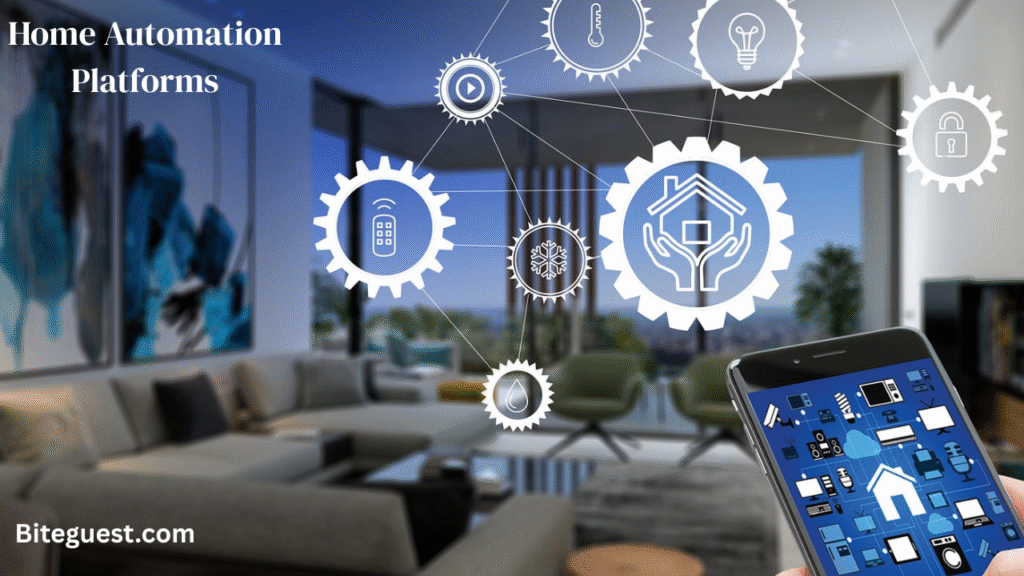
Home automation platforms are designed to unite all smart home technology into a cohesive environment. Homeowners can manage bright lights, smart thermostats, smart appliances, and more from a single home automation app. Essentially, home automation gives homeowners a simple, connected home. Home automation also keeps your smart home operating fluidly and seamlessly without confusion.
The smart home platform uses AI, machine learning, and Internet of Things (IoT) technology to interpret and learn each homeowner’s habits, routines, and expectations, and then automatically manages adjustments to enhance comfort and efficiency. The smart home platform can lock doors, put appliances in sleep mode, turn off lights, and manage other home security measures. It can also send an alert if something unexpected happens within the home. Home automation makes every experience in the home easier, safer, and completely customized.
The Benefits of Smart Homes vs Traditional Houses
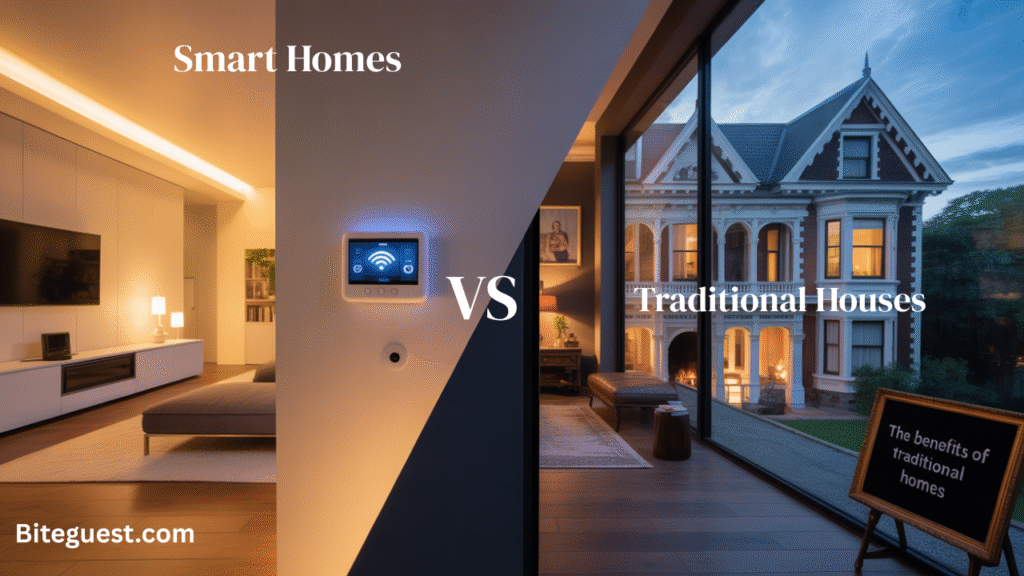
Smart homes offer significant advantages over traditional houses, making life easier, safer, and more efficient. Here’s a detailed comparison:
1. Convenience
Smart homes automate daily tasks, while traditional homes rely entirely on manual operation. For example:
- Smart thermostats adjust temperatures automatically, whereas in a traditional house, you must manually change the thermostat.
- Lights, locks, and appliances can be controlled remotely via apps or voice commands in smart homes.
Automation saves time, reduces stress, and creates a seamless living experience.
2. Energy Efficiency
Smart homes use energy-efficient systems to save electricity and reduce bills. Features such as smart lighting, thermostats, and appliances optimize energy use in real time. In contrast, traditional houses may waste energy by leaving lights on or by running heating/cooling systems unnecessarily.
- Example: A smart thermostat can save 20–30% on annual energy bills.
3. Enhanced Security
Smart homes provide advanced security features:
- The use of cameras, smart locks, motion detectors, and video doorbells provides constant supervision
- Homeowners are notified and can act quickly in the event of danger thanks to alerts and remote access.
Classic houses often rely on locks, alarms, and guard patrols, which may not provide immediate monitoring or notifications.
4. Health and Wellness
Smart homes can purify the air, monitor sleep, and connect with health wearables. They have the following characteristics:
- Smart air purifiers for allergens and pollutants
- Sleep-tracking smart beds
- Notifications for medication or emergencies
Conventional houses lack automated health and wellness monitoring, requiring manual intervention and effort.
5. Entertainment and Lifestyle
The presence of Smart homes has given rise to a new generation of entertainment experiences through AI-enhanced speakers, smart TVs, and interconnected systems. The lighting and sound can be matched with movies or music for a better experience. Conventional houses lack coordinated control and thus rely on individual appliances.
6. Cost Savings Over Time
Smart homes, although more expensive initially, are, in fact, long-term savers. The drying of the initial investment through the savings on energy, less maintenance, and more efficient use of the appliance has taken its toll. Traditional houses, on the other hand, may be less costly to set up but then incur more costs over time due to inefficiency.
What are the advantages and disadvantages of smart homes?
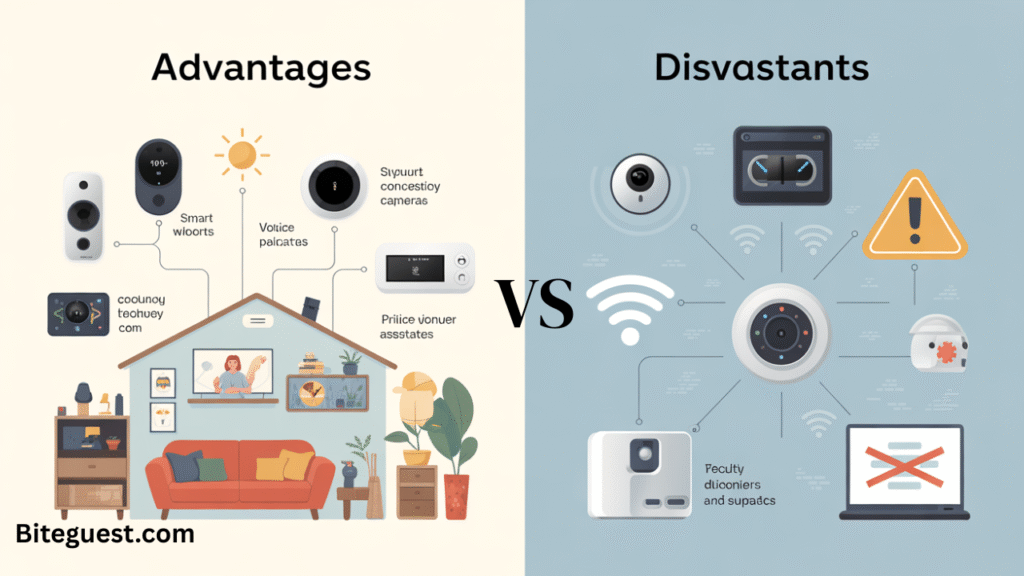
| Advantages | Disadvantages |
| Automates daily tasks efficiently | High setup costs |
| Allowing remote control through a mobile phone or a home assistant | Requires stable internet |
| Energy savings and energy efficiency | Security risks if hacked |
| Increased security with smart sensors and alarms | Technically complex |
| Health and wellness monitoring | Privacy concerns from data collection |
| Smart gadgets offer a customized living experience | Some devices may not integrate |
| Smart TV and AI create an integrated entertainment system | Dependence on technology |
Can Smart Homes Work Without the Internet?
Some devices can work effectively without an internet connection; however, most smart home systems still depend on the internet for automation, remote access, and interaction with other smart devices. The internet is essential for the full functionality of smart home systems, predictive AI routines, and the greatest possible convenience.
Future Outlook: How Smart Homes Will Change Lives
- Smart homes will be fully autonomous.
- The AI butler will control all the gadgets.
- Energy-efficient smart units will handle their own maintenance.
- The combination of voice commands, IoT gadgets, and machine learning will create a smarter home.
- The house will automatically know and cater to the user’s needs.
- Intelligent system monitoring for security and health will protect you.
- Life will be more effective and easier.
- The implementation of 5G technology and smart systems will provide instant control.
- Smart home tech will always be able to know and anticipate the user’s needs.
- Living in smart homes of the future will be safer, greener, and more personalized.
Common Smart Home Devices
The standard smart home equipment comprises bright, smart thermostats, smart locks, smart cameras, doorbells, AI assistants, and smart appliances. These devices have created an interconnected ecosystem in the house that can be operated via voice commands, apps, or the central home automation platform.
Conclusion
Smart home technology is heralding the day when comfort, security, and energy efficiency will be the norm. The entire house would be fully integrated with AI assistants, smart appliances, sensors, and connected devices. By 2026, homes would be smart, intuitive, and personalized, offering energy savings, wellness benefits, and convenience without issues. The future of smart home technology is that of a smarter, safer, and more sustainable lifestyle.
FAQS
How does smart home technology change lives in daily routines?
Smart home technology is designed to automate everyday tasks, such as lighting, temperature, and security. This type of technology is designed to save time, create comfort, and make life more convenient and efficient.
Is smart home technology safe to use?
Smart home technology is generally considered safe when the devices themselves are secure and up to date. Strong passwords, updates, and secure networks can reduce the chance of hacking.
Can smart home technology save energy and reduce bills?
Yes, smart home technology uses devices such as lighting, smart thermostats, and appliances to reduce energy use and lower electricity bills.
Are smart home devices difficult to set up and install?
Most smart home devices are easy to install, and apps and guides help consumers understand their functionality.
What is the future of smart home technology?
The future of smart home technology is made possible by AI, automation, and the IoT, enabling homes to become more autonomous, energy-efficient, and personalized.
Can a smart home work without an internet connection?
Some connected devices can function independently, but most automation and artificial intelligence routines require internet connectivity to operate at their best.
What are some standard smart home devices?
Some devices include bright lights, smart thermostats, smart locks, smart cameras, smart doorbells, AI assistants, and smart appliances, all of which connect to the home.